
U.S. Import Bans on Certain Canadian Goods Are Now in Effect: What Businesses Should Know
The U.S.-Canada trade relationship has entered another period of uncertainty, and businesses that import from Canada, sell into Canada, or rely on Canadian suppliers should be paying close attention.
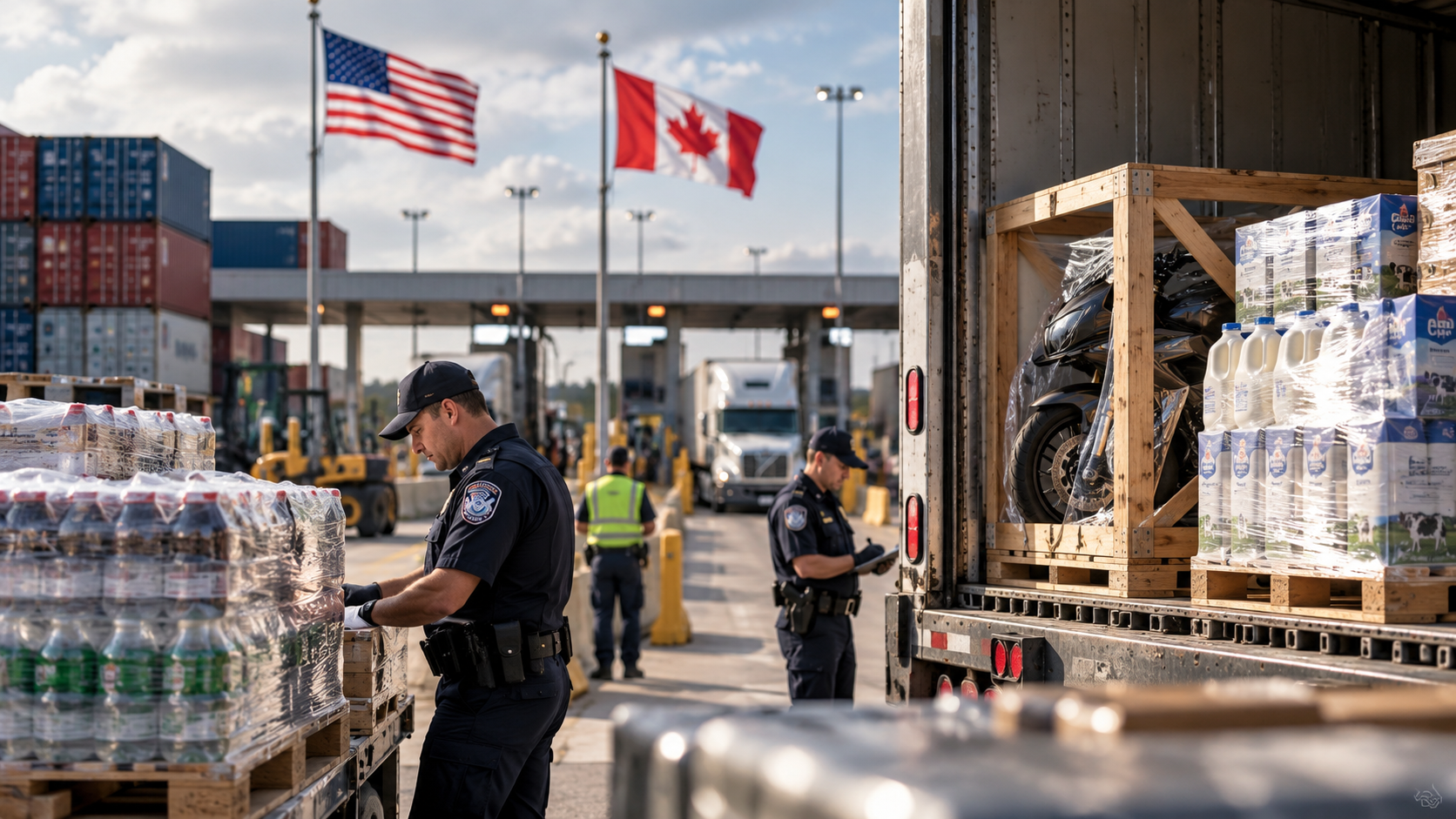
Effective September 29, 2026, the United States began prohibiting the importation of certain Canadian products under measures taken pursuant to Section 338 of the Tariff Act of 1930. The restrictions affect selected motorcycles, dairy-related products, molasses, non-alcoholic beer, and several categories of alcoholic beverages.
For businesses operating across the U.S.-Canada border, this is more than another tariff headline. An import prohibition can affect sourcing, contracts, inventory planning, transportation, pricing, and the ability to complete transactions that may already be underway.
If your company imports Canadian products, works with Canadian suppliers, or is evaluating cross-border expansion, now is a good time to review where these rules may affect your business. TEIL Firms can help companies identify their exposure and determine what practical steps may be appropriate before a trade issue becomes an operational problem.
What Changed?
The new restrictions prohibit the importation of certain Canadian products that had previously been subject to additional tariffs.
The affected categories include certain:
motorcycles with engines over 800 cc;
whey and dairy-related products;
molasses;
non-alcoholic beer; and
alcoholic beverages, including certain beer, wine, cider, whisky, vodka, rum, brandy, and other spirits.
The specific legal treatment depends on the product's classification under the Harmonized Tariff Schedule of the United States, or HTSUS.
That detail matters.
A business cannot reliably determine whether a product is covered simply by looking at its general commercial description. Two products that appear similar in the marketplace may fall under different tariff classifications and therefore receive different treatment at the border.
Companies importing Canadian goods should confirm their product classifications rather than assume that prior customs treatment will continue to apply.
From Tariffs to Import Restrictions
The current measures are part of a broader series of trade actions between the United States and Canada. Earlier in 2026, the United States imposed additional tariffs on certain Canadian goods under Section 338, citing what the Administration described as discriminatory treatment of American exports. Canada subsequently responded with counter-tariffs on a range of U.S. products. The United States then modified its measures again, moving some Canadian products from additional tariffs to outright import prohibitions.
That change is especially significant for businesses.
A tariff generally increases the cost of bringing a product into the United States. A company may decide to absorb that cost, pass it on to customers, renegotiate pricing, or change suppliers. An import ban creates a different problem. If a covered product cannot legally enter the United States, the company may no longer have the option of simply paying more to continue the transaction. That can affect not only future purchasing decisions, but also existing purchase orders, goods already in transit, distributor agreements, supplier relationships, and customer commitments.
Why This Matters Even If Your Company Does Not Import Alcohol or Motorcycles
The current list of prohibited products is relatively targeted, but the larger issue is the direction of U.S.-Canada trade policy.
Businesses should not assume that they are unaffected simply because their products do not appear on the current list.
Trade measures can expand, contract, or change quickly. Products can move from ordinary treatment to additional tariffs, from one tariff rate to another, or from tariffs to import restrictions.
That means companies with Canadian exposure should understand their supply chains before a new restriction directly affects them.
A U.S. manufacturer, for example, may purchase a finished component from a domestic supplier without realizing that the supplier depends on a Canadian manufacturer farther upstream.
A distributor may have contractual commitments tied to Canadian inventory.
A retailer may rely on Canadian-origin ingredients or products that become more expensive or harder to source.
A business expanding into Canada may also face changing Canadian countermeasures affecting U.S. exports.
The risk is therefore not limited to businesses that consider themselves "international companies." Cross-border exposure can exist several layers below the surface of an otherwise domestic operation.
USMCA Status Does Not Necessarily Resolve the Issue
Businesses should also avoid assuming that a product is unaffected simply because it qualifies for preferential treatment under the United States-Mexico-Canada Agreement, or USMCA.
The current Section 338 measures operate separately from ordinary USMCA tariff treatment.
A product may satisfy USMCA origin requirements and still be subject to another U.S. trade restriction.
Companies should therefore look at several questions separately:
Is the product Canadian in origin?
What is its HTSUS classification?
Does it qualify under USMCA?
Is that classification subject to a Section 338 tariff or import prohibition?
Does another trade measure, such as a Section 232 tariff, also apply?
Those questions can lead to very different answers depending on the product.
Contracts May Be Just as Important as Customs Rules
The changing trade environment also makes commercial contract language increasingly important.
Suppose a U.S. company agreed months ago to purchase Canadian products for delivery this fall. If those products are now prohibited or subject to substantially higher duties, who bears the resulting cost or loss?
The answer may depend on the contract.
Businesses involved in cross-border transactions should review provisions addressing:
tariffs and customs duties;
changes in law;
government restrictions;
force majeure;
delivery obligations;
pricing adjustments;
customs clearance;
termination rights;
substitute performance; and
Incoterms and risk of loss.
Companies should not assume that a new tariff or government restriction automatically excuses performance.
Likewise, suppliers should not assume they can automatically pass increased costs to a customer simply because a government action made the transaction more expensive.
The contract, governing law, and facts of the transaction will matter.
What About Products Already in Transit?
Timing also matters.
The federal measures include specific effective dates, and the legal treatment of a shipment can depend on when the goods were exported, entered, withdrawn from warehouse, or entered for consumption.
Businesses with Canadian goods already moving through the supply chain should therefore review those transactions individually.
This is especially important when inventory is sitting at a port, bonded warehouse, distribution center, or customs facility.
A shipment that was commercially viable when it left Canada may face different treatment by the time it reaches the point of entry.
Canada Is Also Expanding Its Trade Strategy
At the same time, Canada has been signaling a broader effort to diversify its international trade relationships.
The United States remains Canada's largest trading partner by a significant margin, but Canadian officials have increasingly emphasized expanding exports to non-U.S. markets.
That shift is worth watching.
If Canadian businesses become more focused on Europe, Asia, Latin America, Africa, or other markets, U.S. businesses may see changes in supplier priorities, pricing, distribution arrangements, investment decisions, and cross-border partnerships.
For U.S. companies looking internationally, the changing relationship may also create new strategic questions.
Should a company continue relying heavily on one cross-border supply chain?
Should it add suppliers in other jurisdictions?
Could a Canadian partner become part of a broader international distribution strategy?
Should contracts be revised to better address future tariffs and government restrictions?
International expansion is often discussed in terms of entering new markets. Increasingly, it also requires companies to think about resilience when existing markets become less predictable.
What Businesses Should Be Doing Now
Companies with Canadian exposure do not necessarily need to overhaul their operations because of one new trade measure.
They should, however, know where their vulnerabilities are.
A practical review should include several areas.
Identify Canadian exposure. Determine which products, components, suppliers, contract manufacturers, distributors, and customers involve Canada.
Confirm tariff classifications. Do not rely solely on commercial product names. HTSUS classification can determine whether a product is affected.
Review existing contracts. Pay particular attention to tariffs, changes in law, force majeure, delivery obligations, pricing, and termination rights.
Examine shipments already in transit. Timing may affect whether a product can still enter the United States and what duties or restrictions apply.
Evaluate alternative suppliers. Businesses do not necessarily need to change vendors, but they should know whether alternatives exist if restrictions expand.
Review USMCA assumptions. USMCA qualification should not be treated as a blanket exemption from all other U.S. trade measures.
Monitor both U.S. and Canadian actions. Companies operating in both countries need to watch measures coming from each side of the border.
The Bigger Business Lesson
The current U.S.-Canada dispute illustrates a broader reality about international business.
Trade compliance can no longer be treated as something that matters only when goods reach customs.
It affects contracts, pricing, supply chains, intellectual property strategy, distributors, market entry, procurement, and long-term business planning.
Companies that understand where their products come from, how those products are classified, what their contracts require, and what alternatives are available are better positioned when government policy changes.
And those changes can happen quickly.
A product that was commercially viable under one tariff structure may become significantly more expensive under another. A transaction that could proceed with an additional duty may become impossible if the product is later prohibited from importation.
That is why international businesses should increasingly view trade compliance as part of their broader growth strategy—not simply as a customs issue.
The TEIL Perspective
For businesses looking to grow internationally, the goal should not be to react to every new tariff announcement in isolation.
The stronger approach is to build a legal and operational structure that can adapt when trade rules change.
That may include reviewing supplier relationships, strengthening contract language, confirming product classifications, diversifying sourcing, protecting intellectual property in new markets, and evaluating how future trade restrictions could affect expansion plans.
TEIL Firms assists businesses with international trade and regulatory compliance, cross-border contracts, intellectual property protection, and global expansion strategy. If your company is working with Canadian suppliers, entering international markets, or trying to understand how changing trade rules could affect your operations, we can help you evaluate the legal and strategic issues before they disrupt your next move. Click the link below to get started.
Source Credit
This article was inspired by recent reporting from Logistics Management concerning the implementation of restrictions on certain Canadian imports. TEIL Firms independently reviewed the underlying trade developments and prepared this original analysis. No language, quotations, or proprietary commentary from the original article has been reproduced.
This article is provided for informational purposes only and does not constitute legal advice.