
Global Consolidation Is Reshaping Business: What the BT–Verizon Deal Means for U.S. Companies
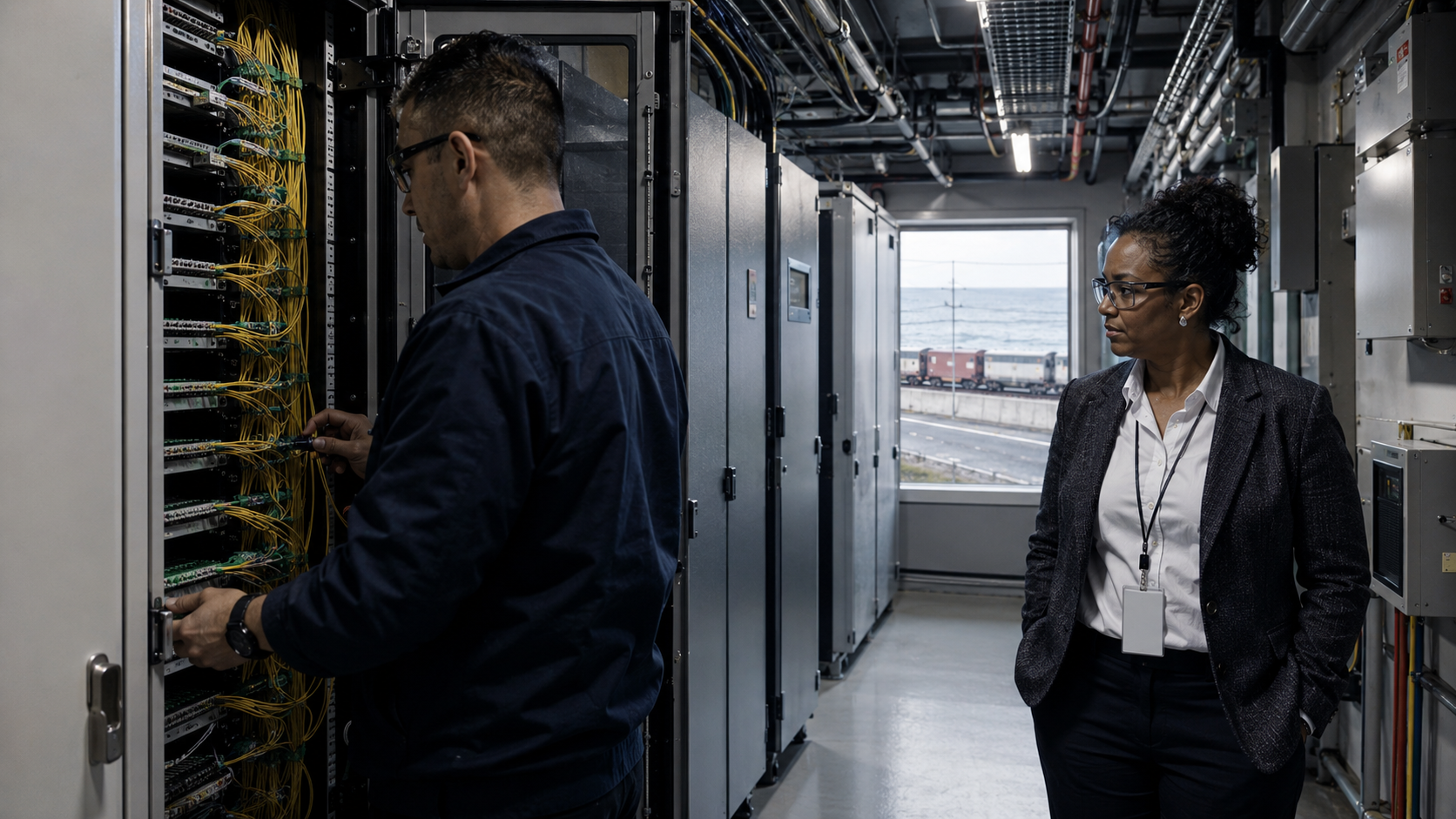
From telecommunications and cybersecurity to rail transportation, food distribution, and critical minerals, some of the world’s largest companies are reorganizing the infrastructure on which other businesses depend.
One of the clearest recent examples came on June 29, 2026, when British telecommunications group BT and U.S.-based Verizon announced an agreement to combine their respective international enterprise operations.
The transaction is not a merger of BT and Verizon themselves.
Instead, the companies have agreed to create a 50/50 joint venture that will combine BT International with Verizon’s international enterprise wireline operations. Each company will hold equal voting rights, and Verizon has agreed to make a $625 million equalization payment to BT.
The proposed company is expected to serve more than 3,000 multinational customers across more than 180 countries and represent approximately $4 billion in combined annual revenue. The transaction remains subject to regulatory clearances and customary closing conditions and is expected to close in 2027. (bt.com)
The companies have also named Martijn Blanken as chief executive officer-designate of the future venture. He joined BT on September 1, 2026, to work with both companies as they prepare for the proposed joint venture, subject to applicable regulatory restrictions. (verizon.com)
For U.S. business owners, the significance extends far beyond telecommunications.
The BT–Verizon transaction illustrates a broader commercial reality: major corporate combinations can alter the digital, logistical, financial, technological, and material systems through which much smaller businesses operate.
A merger or joint venture between multinational corporations can eventually affect a small or midsized company’s contract, pricing, data flows, cybersecurity arrangements, transportation routes, supply availability, negotiating leverage, and ability to switch providers.
That makes corporate consolidation a business-contract issue—not merely a Wall Street story.
Why BT and Verizon Are Combining Their International Operations
BT and Verizon have both been working to simplify their businesses while focusing resources on their strongest domestic operations.
Their international enterprise businesses, however, serve multinational companies that increasingly need connectivity across numerous countries, cloud environments, data centers, offices, factories, and suppliers.
The joint venture gives BT and Verizon the opportunity to retain a significant presence in the international enterprise market without each company independently maintaining a separate global organization of the same scale.
According to BT, the new operation is intended to create a connectivity platform designed for a cloud-first, AI-oriented business environment while supporting local regulatory, operational, and data-sovereignty requirements. (bt.com)
International telecommunications today involve much more than telephone service or basic internet connections.
They increasingly include:
Cloud connectivity;
Cybersecurity;
Data routing;
Access to data centers;
Remote-work systems;
AI infrastructure;
Network monitoring;
Cross-border privacy compliance;
Business-continuity systems; and
Connections among suppliers, offices, customers, factories, and digital platforms in multiple countries.
For a multinational company, the provider responsible for those systems can become deeply embedded in daily operations.
That can produce efficiency.
It can also create dependence.
What the BT–Verizon Venture Could Mean for Business Customers
Because the transaction has not yet closed, businesses should be cautious about predicting its ultimate effect on pricing, service levels, network architecture, customer migration, or contractual relationships.
The companies have not yet announced every integration decision that will affect existing customers.
Several issues nevertheless deserve attention now.
A More Integrated International Network
A business operating in multiple countries may eventually be able to obtain more of its international connectivity and network-management services through a single organization.
That could reduce administrative complexity.
A manufacturer with operations in the United States, Europe, Africa, and Asia may prefer having one organization responsible for connectivity among factories, warehouses, cloud systems, offices, and data centers rather than coordinating several unrelated regional providers.
Standardized cybersecurity and network-management processes may also become easier to implement across international operations.
But consolidation can solve one problem while creating another.
Vendor Concentration Can Increase Operational Risk
When more services are concentrated with one provider, a disruption at that provider can affect more of the customer’s business simultaneously.
A network outage, cybersecurity incident, pricing dispute, contractual termination, or failed migration may have wider consequences if the customer has consolidated critical services with a single organization.
The relevant issue is therefore not simply whether the provider has become larger.
Businesses should ask:
How much of our operation would be affected if this provider became unavailable?
A larger provider may reduce coordination risk while increasing concentration risk.
Existing Contracts Still Matter
Customers of BT International or Verizon’s affected international enterprise operations should review existing agreements rather than assuming that the future venture automatically replaces every contractual right.
Relevant provisions may include:
Assignment;
Delegation;
Change of control;
Subcontracting;
Data processing;
Subprocessors;
Data transfers;
Service levels;
Cybersecurity requirements;
Incident-notification deadlines;
Pricing;
Renewal;
Termination;
Transition assistance; and
Migration to another platform.
A corporate transaction does not automatically erase the parties’ contractual obligations.
The legal effect will depend on the transaction structure, applicable law, identity of the contracting entity, and language of the particular agreement.
Data Privacy and Digital Sovereignty Are Central to the Transaction
The proposed BT–Verizon business expects to serve customers in more than 180 countries.
That means the resulting network will operate across jurisdictions with materially different rules involving telecommunications, cybersecurity, personal data, government access, data localization, international data transfers, and digital sovereignty.
Business customers should determine:
Where their information will be transmitted;
Where information will be stored;
Which legal entity will provide the service;
Which affiliates will have access;
Which subcontractors and subprocessors will be involved;
Whether existing data-processing agreements remain sufficient;
Whether transfer mechanisms need to change;
Which country’s law governs the service;
What cybersecurity obligations apply; and
What happens during a security incident.
These questions become particularly important for healthcare, financial services, government contractors, technology companies, professional-services firms, and other businesses handling sensitive or regulated information.
They should be addressed before a migration—not after a data incident or regulatory inquiry.
The Broader M&A Market Is Large—but More Uneven Than It Appeared Earlier in 2026
The BT–Verizon announcement came during an extraordinary period for large corporate transactions.
PwC’s June 2026 midyear analysis projected that global M&A value could approach $4 trillion for the year, with transactions exceeding $5 billion accounting for approximately 48% of global deal value.
PwC also projected declining overall transaction volume, meaning that a smaller number of very large transactions were driving a disproportionately large share of total deal value. (pwc.com)
The first half of 2026 was particularly strong.
Preliminary LSEG data reported in June put first-half global M&A value at approximately $2.7 trillion, while the actual number of transactions was lower than in the comparable 2025 period. (axios.com)
By September, however, the picture had become more complicated.
Preliminary LSEG data reported on September 18 indicated that deal activity had slowed sharply during the third quarter. The quarter was on course to break a six-quarter streak in which global M&A value exceeded $1 trillion. (axios.com)
The more accurate September 2026 conclusion is therefore not simply that M&A is continually accelerating.
It is that 2026 has featured unusually large, strategically important transactions even while overall deal activity remains uneven and highly concentrated in megadeals.
That distinction is especially important because many of those large transactions involve infrastructure other businesses cannot easily avoid.
Google and Wiz: Cloud Security After a Major Acquisition
Google completed its acquisition of cloud-security company Wiz on March 11, 2026.
The transaction had originally been announced at approximately $32 billion. Alphabet subsequently reported a preliminary acquisition purchase price of approximately $29.5 billion after purchase-price adjustments, excluding certain post-combination compensation arrangements. (sec.gov)
Wiz became part of Google Cloud while retaining the Wiz brand.
One of the important questions surrounding the acquisition was whether Wiz would remain a multicloud security platform rather than becoming focused primarily on Google Cloud.
Google and Wiz have continued to state that multicloud support remains part of the product strategy.
By July 2026, Wiz stated that it continued to support customers across major cloud and AI environments, including Amazon Web Services, Microsoft Azure, Google Cloud, and other platforms. (wiz.io)
Integration has also continued.
In September, Wiz announced deeper integration between Wiz Defend and Google Security Operations, demonstrating that the companies are increasingly combining security capabilities while maintaining the broader multicloud positioning. (wiz.io)
For customers, this can create substantial benefits.
Cloud infrastructure, threat intelligence, cybersecurity monitoring, vulnerability management, and AI-powered security tools may become more integrated.
But the customer should still examine concentration risk.
Businesses using Wiz should consider:
Whether multicloud functionality remains equivalent across providers;
Whether security data can be exported;
Whether the customer retains access to historical findings;
Who owns vulnerability and configuration data;
Whether customer information may be used to improve AI systems;
How licenses change if the customer leaves Google Cloud;
What integrations depend on Google-controlled products;
Whether pricing becomes bundled;
What audit rights exist;
What incident-notification obligations apply; and
What assistance is provided if the customer migrates.
A cybersecurity tool can be highly effective while still creating commercial dependence.
Security architecture and vendor architecture should therefore be evaluated together.
Union Pacific and Norfolk Southern: The Railroad Merger Has Entered Merits Review
Union Pacific and Norfolk Southern announced their proposed combination in July 2025.
The transaction values Norfolk Southern at approximately $85 billion and would create a combined enterprise valued at more than $250 billion.
The companies say the resulting network would create the first single-company transcontinental railroad in the United States, connecting more than 50,000 route miles across 43 states and approximately 100 ports. (up.com)
For manufacturers, importers, exporters, agricultural businesses, retailers, and distributors, the potential operational advantage is substantial.
Freight could move across a unified network without certain interchanges between major Eastern and Western rail systems.
But the transaction remains a proposal, not an approved merger.
Its regulatory status has advanced significantly since the spring.
On May 28, 2026, the Surface Transportation Board accepted the companies’ revised merger application for consideration but placed the proceeding in abeyance while requesting additional information.
On August 18, 2026, the STB removed the proceeding from abeyance and established a procedural schedule, formally moving the transaction into the process for evaluating its merits.
The Board expressly stated that doing so did not constitute approval of the merger. (stb.gov)
On September 18, 2026, the Board denied several motions seeking summary rejection of the revised application, allowing the proceeding to continue. The merits of the proposed combination remain under review. (stb.gov)
That distinction matters.
Regulatory acceptance of an application means the Board will consider it.
It does not mean the Board has concluded that the merger satisfies the applicable public-interest and competition standards.
The proposed railroad therefore remains both an opportunity and an uncertainty for businesses dependent on freight transportation.
Shippers should review:
Long-term transportation agreements;
Volume commitments;
Fuel surcharges;
Demurrage;
Storage charges;
Accessorial fees;
Service guarantees;
Terminal access;
Alternate ports;
Intermodal options;
Trucking alternatives;
Pricing provisions;
Change-of-control language; and
Remedies for prolonged service interruptions.
The companies argue that their networks are complementary and that the combination would improve efficiency and competition.
Other market participants and interested parties have raised concerns involving competition, access, rates, service, and network control.
Businesses do not need to decide that debate in advance.
They need to determine how either outcome could affect their own transportation strategy.
Anglo American and Teck: Consolidating Critical-Mineral Capacity
The proposed combination of Anglo American and Teck Resources provides another example of consolidation involving infrastructure far removed from ordinary consumer transactions but deeply relevant to businesses throughout the economy.
The companies announced a merger of equals in September 2025 to create Anglo Teck, which they expect to become a top-five global copper producer headquartered in Canada.
Following completion, existing Anglo American shareholders are expected to own approximately 62.4% of the combined company and Teck shareholders approximately 37.6%. (angloamerican.com)
Both sets of shareholders approved the transaction in December 2025.
Canada approved the transaction under the Investment Canada Act later that month. (angloamerican.com)
The transaction has not yet closed.
As of the latest September information, Chinese antitrust approval remained the principal outstanding regulatory milestone, and the companies continued to target completion during the previously announced September 2026–March 2027 window. (reuters.com)
Copper is critical to:
Electrical systems;
Data centers;
Telecommunications;
Construction;
Electric vehicles;
Automobiles;
Renewable energy;
Industrial machinery;
Grid infrastructure; and
Consumer electronics.
The transaction therefore matters to companies that may never purchase copper directly from Anglo American or Teck.
Greater scale may allow the combined company to finance projects, coordinate operations, and increase production more efficiently.
But purchasers throughout the downstream supply chain should continue evaluating:
Commodity-price adjustments;
Published price indexes;
Currency fluctuations;
Tariffs and duties;
Country-of-origin requirements;
Minimum-purchase obligations;
Allocation during shortages;
Alternative sources;
Force majeure;
Sanctions;
Export controls;
Sustainability requirements; and
Supply-chain traceability.
A major mining transaction does not independently determine the world price of copper.
Copper prices reflect global supply, demand, inventories, energy costs, project development, currency movements, industrial activity, government policy, and numerous other factors.
But the proposed Anglo Teck combination demonstrates why access to critical minerals has become an increasingly strategic corporate issue.
Mars and Kellanova: A Completed Consumer-Goods Megadeal
Not every transaction discussed in this broader consolidation trend remains pending.
Mars completed its acquisition of Kellanova on December 11, 2025, after receiving the required regulatory approvals.
Kellanova’s portfolio—including Pringles, Cheez-It, Pop-Tarts, Rice Krispies Treats, RXBAR, and Kellogg’s international cereal brands—joined a Mars portfolio that already included major brands such as M&M’s, Snickers, Twix, Skittles, and KIND. (mars.com)
The transaction creates a substantially larger global snacking organization.
For consumers, that may mean broader product distribution, additional investment, and new products.
For retailers, distributors, ingredient suppliers, packaging manufacturers, logistics providers, co-manufacturers, and smaller food companies, the commercial consequences can be more complicated.
A larger customer or supplier may have greater purchasing volume.
It may also have greater negotiating leverage.
Companies doing business within the Mars and Kellanova ecosystems should pay attention to:
Shelf-space arrangements;
Product placement;
Distributor territories;
Exclusivity;
Promotional allowances;
Sales forecasts;
Chargebacks;
Deductions;
Packaging specifications;
Labeling;
Private-label restrictions;
Intellectual-property provisions;
Supplier qualification;
Manufacturing standards;
Termination rights; and
Inventory disposition.
Consolidation can create opportunities for suppliers capable of supporting a much larger international organization.
It can also make losing one corporate customer considerably more significant.
Not Every Megadeal Creates the Same Kind of Concentration
It is important not to treat every large transaction as economically identical.
The BT–Verizon transaction combines international enterprise operations in a joint venture.
Google’s purchase of Wiz combines a major cloud provider with a cybersecurity platform.
Union Pacific and Norfolk Southern are proposing to connect complementary railroad systems covering different geographic regions.
Anglo American and Teck are combining mining portfolios.
Mars has integrated two large consumer-brand portfolios.
Each creates a different competitive and contractual structure.
The practical question for most businesses is therefore not simply:
“Is consolidation good or bad?”
A more useful set of questions is:
What does this transaction concentrate?
Where does my company depend on the companies involved?
Which alternatives remain available?
What does my contract allow if the service, supplier, ownership, price, or platform changes?
Those questions turn an abstract M&A headline into a concrete risk analysis.
A Corporate Transaction Can Reach Into an Existing Contract
Small and midsized businesses often treat major mergers as events primarily affecting shareholders, investment bankers, regulators, and multinational executives.
That assumption can be expensive.
A large transaction can eventually change:
Who controls a critical supplier;
Which company handles customer information;
Which cybersecurity platform protects the business;
Which carrier transports its products;
Which company supplies an essential material;
Which brands receive distributor or retailer priority;
Which technology ecosystem employees must use;
How pricing is determined;
Which entity sends invoices;
Where disputes are resolved;
Which subcontractors receive confidential information; and
Whether a commercially realistic alternative still exists.
That is why assignment, change-of-control, termination, renewal, pricing, data-rights, and transition provisions deserve attention before a corporate integration reaches the customer.
Five Steps Businesses Should Take When a Critical Vendor Is Involved in a Major Transaction
1. Identify Critical Dependencies
Businesses should identify essential:
Telecommunications providers;
Cloud platforms;
Cybersecurity vendors;
Logistics companies;
Rail and freight carriers;
Distributors;
Raw-material suppliers;
Manufacturers; and
Major customers.
Then determine whether any are participating in a merger, acquisition, joint venture, divestiture, or substantial restructuring.
The most dangerous dependency may not be the largest contract by dollar value.
It may be the vendor whose failure would stop operations.
2. Review Contracts Before the Change Notice Arrives
Review provisions involving:
Assignment;
Change of control;
Pricing;
Renewal;
Termination;
Service levels;
Cybersecurity;
Data processing;
Subcontracting;
Intellectual property;
Confidentiality;
Migration;
Transition assistance; and
Dispute resolution.
A provider’s notice describing what will happen after a transaction does not necessarily define all of the customer’s contractual rights.
The contract does.
3. Measure Concentration at the Corporate-Group Level
Several products or services may appear to come from different vendors while ultimately being controlled by the same corporate organization.
Businesses should determine how much of their:
Revenue;
Data;
Communications;
Cybersecurity;
Inventory;
Transportation;
Raw materials; and
Customer access
depends on one corporate group.
A company that has diversified across brands may still be highly concentrated economically.
4. Build the Alternative Before It Is Needed
Businesses should identify substitute providers, transportation routes, technology platforms, suppliers, data solutions, and financing sources.
But identifying an alternative is not enough.
The company should determine:
Whether the alternative has capacity;
Whether systems are compatible;
Whether data can be transferred;
How long migration would take;
Whether regulatory approval is required;
Whether employees require retraining;
Whether contracts can be terminated; and
What the transition would cost.
An alternative that requires six months to implement may not provide meaningful protection during a two-day operational crisis.
5. Use Corporate Integration Periods Strategically
Large transactions also create opportunities.
Integration can require companies to:
Combine technology systems;
Rationalize vendors;
Reorganize distribution;
Change suppliers;
Enter new markets;
Integrate compliance programs;
Consolidate logistics;
Update cybersecurity;
Migrate data; and
Renegotiate commercial agreements.
Businesses providing technology, cybersecurity, legal services, compliance support, logistics, staffing, integration services, professional consulting, local-market expertise, or specialized products may find opportunities during these transitions.
The strategic response to a megadeal should therefore not always be defensive.
A company should also ask whether the transaction creates an opportunity for it to become a new supplier, partner, distributor, integrator, or alternative provider.
Conclusion
The BT–Verizon joint venture reflects a broader reorganization of the infrastructure supporting global business.
Telecommunications companies are combining international network operations.
Cloud and cybersecurity services are becoming increasingly integrated.
Railroad companies are seeking to create a coast-to-coast freight network.
Mining companies are attempting to build greater scale around critical minerals.
Consumer-goods companies are assembling larger global brand portfolios.
The M&A market itself has also demonstrated how quickly conditions can change.
The first half of 2026 produced extraordinary megadeal activity, while preliminary September data indicate that transaction activity slowed sharply in the third quarter.
Businesses therefore should not assume either that corporate consolidation will accelerate indefinitely or that a slowdown in headline deal volume makes these transactions less important.
A single transaction involving the company that carries freight, secures cloud infrastructure, routes international communications, supplies critical materials, or controls an important distribution channel can have more practical impact than hundreds of smaller acquisitions elsewhere in the economy.
The correct response is neither automatic optimism nor automatic opposition.
It is preparation.
Businesses should identify where they depend on the companies involved, understand their contractual rights, assess concentration risk, develop realistic alternatives, and determine whether the transition creates new commercial opportunities.
In an economy increasingly dependent on global digital, transportation, supply-chain, and materials infrastructure, a transaction between two multinational corporations can eventually reach all the way into a much smaller company’s contracts, data systems, operating costs, suppliers, and customers.
The business that recognizes that connection before the transaction closes will be in a much stronger position to respond when the effects finally reach its own operations.
This article is provided for general informational purposes only and does not constitute legal, investment, financial, competition, regulatory, or other professional advice. The effect of any merger, acquisition, joint venture, restructuring, or divestiture on a particular business will depend on the transaction structure, governing contracts, applicable law, regulatory decisions, industry conditions, and facts of the individual business relationship.