
Mexico as a Manufacturing Alternative to China: What Midwest Businesses Need to Know Before Nearshoring
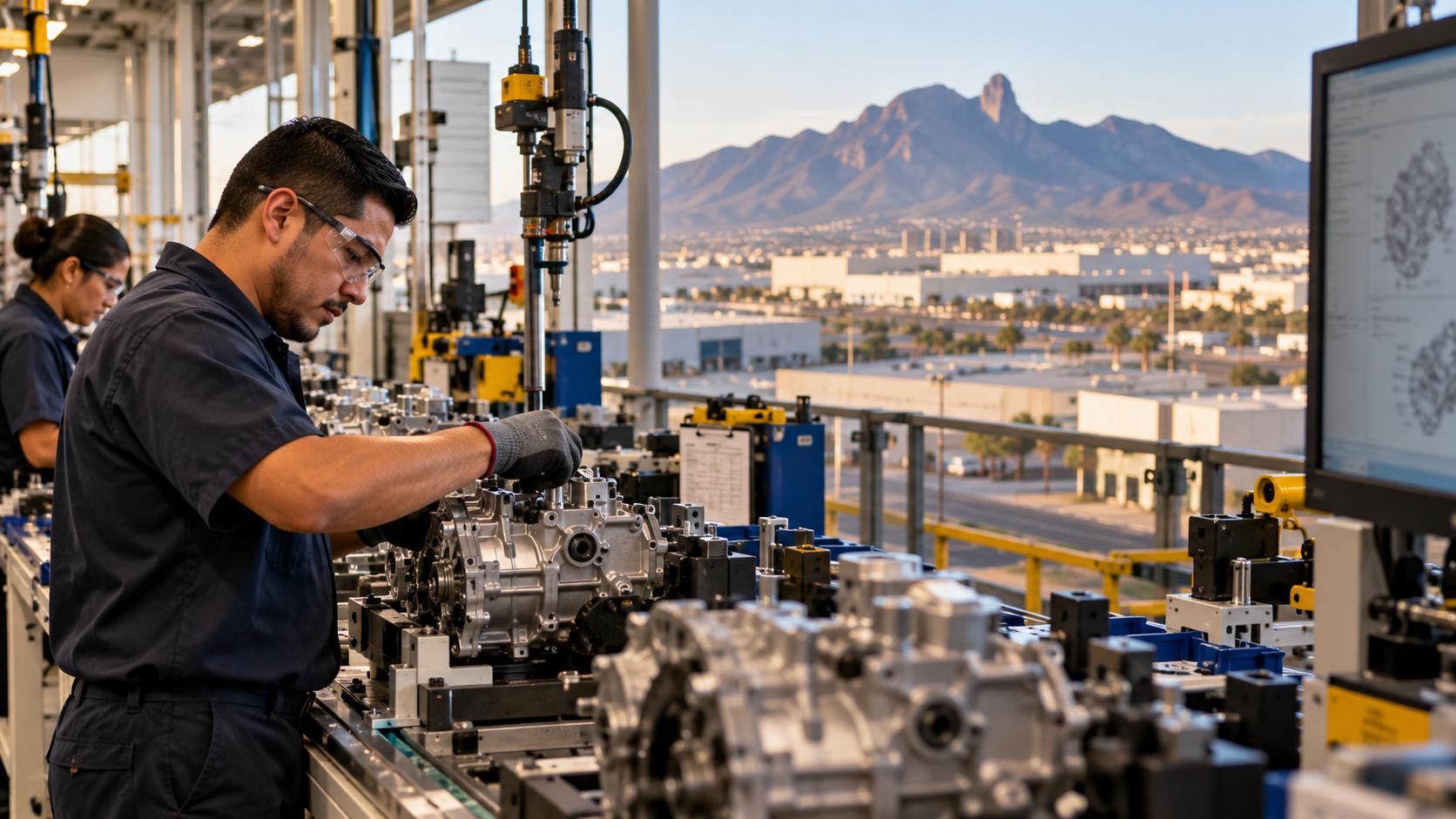
For Midwest businesses trying to reduce exposure to China tariffs, supply-chain disruption, and long-distance sourcing risk, Mexico can appear to offer an obvious alternative.
It is geographically closer. The United States and Mexico already have deeply integrated manufacturing supply chains. And, when the requirements are met, qualifying goods can receive preferential treatment under the United States-Mexico-Canada Agreement (USMCA).
But moving production from China to Mexico is not as simple as finding a Mexican factory and changing the address on the purchase order.
For companies in Illinois and throughout the Midwest, a successful nearshoring strategy requires a closer look at rules of origin, Chinese components, customs classification, contracts, intellectual property, labor compliance, supplier diligence, and the changing USMCA landscape.
If your company is considering moving manufacturing, assembly, or sourcing from China to Mexico, TEIL Firms can help evaluate the legal structure before the transition begins—from supplier agreements and intellectual property protection to trade compliance and international expansion strategy.
Why Mexico Is Getting So Much Attention
Mexico already sits at the center of North American manufacturing.
USTR describes the United States and Mexico as having longstanding integrated supply chains, particularly in industries including automotive products, electronics, medical devices, and textiles. In 2024, Mexico was the largest source of U.S. imports and the second-largest destination for U.S. exports.
For a Midwest manufacturer, Mexico may offer practical advantages over sourcing from Asia.
The geographic distance is shorter. U.S. management teams can potentially visit suppliers more easily. Transportation can involve cross-border trucking rather than an ocean voyage. And manufacturing can take place within an existing North American trade framework.
But those benefits should not be confused with automatic tariff savings.
The legal question is not simply:
“Was this product assembled in Mexico?”
The better questions are:
What is the product's legal country of origin? Does it meet the applicable USMCA rule of origin? What non-Mexican components are used? And which U.S. duties or trade remedies could still apply when it crosses the border?
USMCA Benefits Have to Be Earned
One of the strongest attractions of producing in Mexico is potential access to preferential USMCA treatment.
But manufacturing in Mexico does not automatically make a product USMCA-qualified.
The agreement contains product-specific rules of origin that determine whether a good has sufficient North American content or has undergone the required manufacturing process to qualify.
The automotive industry provides an especially visible example. Under USMCA, qualifying vehicles are subject to a 75% regional value-content requirement, along with additional requirements involving core parts, steel and aluminum sourcing, and labor value content.
Other industries have their own product-specific rules.
A company considering Mexican production therefore needs to identify the HTS classification of the finished product and the origin of important components before assuming that the finished goods will enter the United States under USMCA preferences.
CBP also requires a USMCA certification of origin containing nine minimum data elements when preferential treatment is claimed.
For businesses, that means USMCA planning should take place before production is relocated, not after the first shipment reaches the border.
Moving Final Assembly to Mexico May Not Be Enough
This is one of the most important issues for companies attempting to move away from China-related tariff exposure.
Imagine that a manufacturer purchases almost-complete components from China, ships them to Mexico, performs limited assembly or packaging there, and then imports the finished product into the United States.
Is the product now Mexican?
Not necessarily.
Country-of-origin analysis can be highly fact-specific. U.S. Customs and Border Protection has repeatedly examined whether manufacturing in Mexico results in a sufficiently meaningful transformation of imported components.
In some rulings, CBP has determined that substantial manufacturing in Mexico created a new product and therefore resulted in Mexican origin. For example, CBP concluded in a 2025 ruling that extensive manufacturing involving more than 100 materials and sophisticated production processes in Mexico resulted in substantial transformation for purposes including Section 301 treatment.
In another ruling involving lawn mowers, CBP concluded that the combination of raw materials and components through significant manufacturing in Mexico created a new and different article and therefore resulted in Mexican origin.
But minimal or simple assembly may produce a different result. CBP's analysis considers the actual manufacturing process and whether the components emerge as a new article with a different name, character, or use.
That is why businesses should be cautious about a strategy that amounts to little more than “ship the Chinese components to Mexico and finish them there.”
The amount and nature of manufacturing performed in Mexico matters.
Watch the Chinese Content Inside the Mexican Supply Chain
Nearshoring is also becoming increasingly connected to a broader North American policy discussion about non-regional inputs.
During 2026 U.S.-Mexico discussions surrounding the USMCA review, negotiators have repeatedly focused on rules of origin, economic security, North American manufacturing, and reducing reliance on inputs from outside the region.
The first bilateral negotiating round specifically addressed automotive rules of origin, steel and aluminum, and economic security. Subsequent discussions included rules of origin for industrial goods, agriculture, labor, steel, aluminum, and automobiles.
For a Midwest business, this means supplier diligence should go beyond asking whether the factory is located in Mexico.
A company should also understand:
where the supplier obtains its raw materials;
where major components originate;
whether Chinese components remain embedded in the finished product;
whether the supplier can document origin;
whether subcontractors are involved;
whether the applicable USMCA rule can actually be satisfied; and
whether future changes to origin requirements could affect the arrangement.
A Mexican supplier with a heavily China-dependent supply chain may present a very different trade-compliance profile from a supplier using predominantly North American inputs.
Contracts Need to Match the Nearshoring Strategy
A supply-chain transition is also a contract project.
Companies relocating manufacturing should not rely on a standard domestic purchase agreement and assume it will adequately protect an international relationship.
A Mexican manufacturing or supply agreement should address issues such as:
product specifications and quality standards;
pricing and currency;
tooling and equipment ownership;
minimum purchase commitments;
production capacity;
delivery deadlines;
customs documentation;
representations concerning country of origin;
USMCA documentation;
tariff and duty responsibility;
change-in-law provisions;
compliance with labor and trade laws;
audit and inspection rights;
use of subcontractors;
confidentiality;
intellectual property ownership;
dispute resolution;
governing law; and
termination and transition assistance.
The agreement should also address what happens if the expected trade treatment changes.
If a company relocates production because it expects a product to qualify for preferential treatment and that assumption later proves incorrect, who bears the resulting tariff cost?
If a supplier changes the origin of components without notifying the customer, who carries the risk?
If U.S. or Mexican trade rules change during a multi-year agreement, can pricing or sourcing be renegotiated?
Those issues are easier to resolve in the contract before the first production run than after a customs problem occurs.
Protect the Intellectual Property Before Sharing It
Nearshoring also creates an intellectual property issue.
To manufacture a product, a U.S. company may need to provide a Mexican supplier with designs, formulas, molds, tooling, software, technical specifications, customer information, manufacturing processes, or confidential business information.
That means the IP strategy should be considered before those materials cross the border.
USMCA contains an extensive intellectual-property chapter addressing trademarks, patents, trade secrets, copyrights, enforcement, and related protections.
But international agreements do not eliminate the need for businesses to protect their own rights.
A U.S. trademark registration, for example, should not simply be treated as worldwide protection. Businesses entering Mexico should evaluate whether their trademarks, patents, industrial designs, copyrights, and other rights need protection there.
The manufacturing agreement should also clearly state who owns:
molds and tooling;
product designs;
improvements;
manufacturing files;
specifications;
trade secrets; and
intellectual property developed during the relationship.
A business should not wait until a supplier relationship deteriorates to determine who owns the tooling or whether the supplier has authority to continue manufacturing the product.
Labor Compliance Is a Trade Issue Too
Mexico nearshoring also requires attention to labor compliance.
The USMCA includes a Rapid Response Labor Mechanism that allows labor-rights concerns at individual Mexican facilities to become trade-enforcement matters.
This mechanism remains active.
For example, in September 2026, the United States and Mexico announced resolution of a labor matter involving an automotive-component facility in Ciudad Juárez. USTR said liquidation of entries from that facility could resume after agreed remediation had been completed.
On October 2, 2026, the countries announced another formal remediation plan involving a tire manufacturing facility in Jalisco.
For businesses, the lesson is significant.
A company's supplier diligence should not stop at price, quality, and delivery capacity.
Companies considering a Mexican manufacturer should also evaluate labor practices, compliance history, subcontracting arrangements, workplace policies, and the supplier's ability to meet contractual compliance obligations.
A labor problem at a manufacturing facility can potentially become a supply-chain problem for the U.S. customer relying on that facility.
Customs Planning Should Happen Before Production
A business should also model the entire import transaction before choosing Mexico as a production location.
That includes reviewing:
HTS classification. What is the correct tariff classification of the finished product?
Country of origin. What manufacturing occurs in Mexico, and is it sufficient to establish the expected origin?
USMCA qualification. Does the product satisfy its particular rule of origin?
Certification. Who will prepare and maintain the supporting origin documentation?
Importer of record. Which party will be legally responsible for the U.S. import?
Other trade measures. Could Section 232, antidumping, countervailing, or other duties apply?
Customs valuation. What value will be declared upon importation?
Incoterms. At what point do freight costs, customs obligations, risk, and responsibility transfer?
USMCA's customs chapter is designed to facilitate trade, but businesses remain responsible for complying with the applicable import, export, and documentation requirements.
Nearshoring works best when customs analysis is part of the business model—not something handed to the freight forwarder after production has already started.
The USMCA Itself Is Still Evolving
Businesses planning a long-term Mexico strategy should also recognize that the North American trade framework is currently under review.
On July 1, 2026, the three USMCA countries conducted the agreement's required joint review. The United States did not agree to renew the agreement in its current form. Importantly, however, USMCA remains in force while the countries continue discussions.
U.S.-Mexico negotiations during 2026 have focused on issues directly relevant to manufacturers, including rules of origin, automobiles, steel and aluminum, economic security, agriculture, labor, and supply-chain resilience.
And on October 2, 2026, USTR opened another public consultation process in preparation for the 2027 USMCA joint review, with comments due January 12, 2027.
That does not mean businesses should avoid Mexico.
It does mean companies should avoid building a long-term nearshoring strategy on the assumption that today's USMCA rules will necessarily remain unchanged.
Contracts and supply-chain plans should be capable of adapting.
Why This Matters for Midwest Businesses
For Illinois and Midwest companies, Mexico can be particularly important because the region's economy is heavily connected to manufacturing, machinery, automotive supply chains, agriculture, food production, distribution, and logistics.
A Chicago-area business importing components from China may see Mexico as an opportunity to bring manufacturing closer to home.
An Illinois manufacturer may want a supplier that can deliver by truck rather than by ocean freight.
A regional distributor may want to reduce exposure to China tariffs.
A growing consumer brand may want to manufacture closer to its U.S. customers while preparing for expansion throughout North America.
Those can all be legitimate business objectives.
But the strongest nearshoring strategy is not simply:
China → Mexico.
It is:
China exposure → legal and operational analysis → Mexico feasibility → supplier diligence → origin analysis → contracts → IP protection → customs planning → implementation.
That sequence can help prevent a business from spending months relocating production only to discover that the new structure does not produce the tariff, origin, or operational benefits it expected.
What Businesses Should Review Before Nearshoring to Mexico
Before changing suppliers or relocating production, businesses should consider:
Map the existing supply chain. Identify Chinese-origin inputs, critical suppliers, tooling, and manufacturing dependencies.
Identify the correct HTS classifications. Classification will help determine the applicable USMCA origin rule and U.S. tariff treatment.
Analyze country of origin before committing. Determine whether the proposed manufacturing process in Mexico is likely to produce the intended customs result.
Examine the supplier's own supply chain. A Mexican factory may still rely heavily on components from China or other non-USMCA countries.
Conduct supplier diligence. Review ownership, financial stability, manufacturing capability, compliance history, labor practices, litigation, and reputation.
Protect intellectual property first. Review Mexican trademark and other IP protection before transferring valuable technology, designs, or brand assets.
Negotiate the manufacturing agreement carefully. Address origin documentation, tariffs, quality, tooling, IP, compliance, audits, pricing, delivery, and termination.
Model total landed cost. Compare the complete economic picture rather than labor cost alone.
Build flexibility into the arrangement. Current USMCA discussions demonstrate why long-term international agreements should anticipate regulatory and trade-policy changes.
The TEIL Perspective
Mexico may be an important manufacturing alternative for companies looking to reduce their dependence on China, but nearshoring should be treated as an international expansion decision—not merely a purchasing decision.
The factory location is only one part of the strategy.
Businesses also have to consider the origin of components, customs treatment, USMCA qualification, intellectual property, labor compliance, supplier contracts, logistics, and what happens if the trade rules change again.
For Midwest companies, getting those pieces right can determine whether nearshoring creates a more resilient North American supply chain—or simply relocates an existing risk.
TEIL Firms assists businesses with international trade and regulatory compliance, cross-border contracts, intellectual property protection, supplier and partner review, and global expansion strategy. If your company is considering moving manufacturing or sourcing from China to Mexico, we can help evaluate the structure before you commit capital, share intellectual property, or sign the supplier agreement.
This article is provided for informational purposes only and does not constitute legal advice.