
Greenwashing Litigation Is No Longer About Marketing—It Starts in the Data Layer
Most greenwashing lawsuits do not begin with bad intent.
They begin with a sentence that moved faster than the evidence behind it.
A sustainability slogan on a website. A net-zero commitment in an investor deck. A carbon-neutral product label. A diversity metric included in a board presentation. A climate-risk statement in a financing memo. On the surface, each of these may look like ordinary corporate communication. But once challenged by investors, regulators, competitors, or plaintiffs’ firms, the legal question is rarely whether the company meant well.
The question is whether the claim can survive proof.
That is why greenwashing litigation risk is accelerating across both consumer and enterprise-facing markets. The legal discussion in 2026 is increasingly focused on claims substantiation, advertising proof, disclosure consistency, and the widening gap between sustainability language and the evidence architecture underneath it. Global legal outlooks now consistently frame greenwashing as a data-governance and disclosure-controls problem, not merely a marketing review issue.
The market has become deeply skeptical of unsupported ESG narratives.
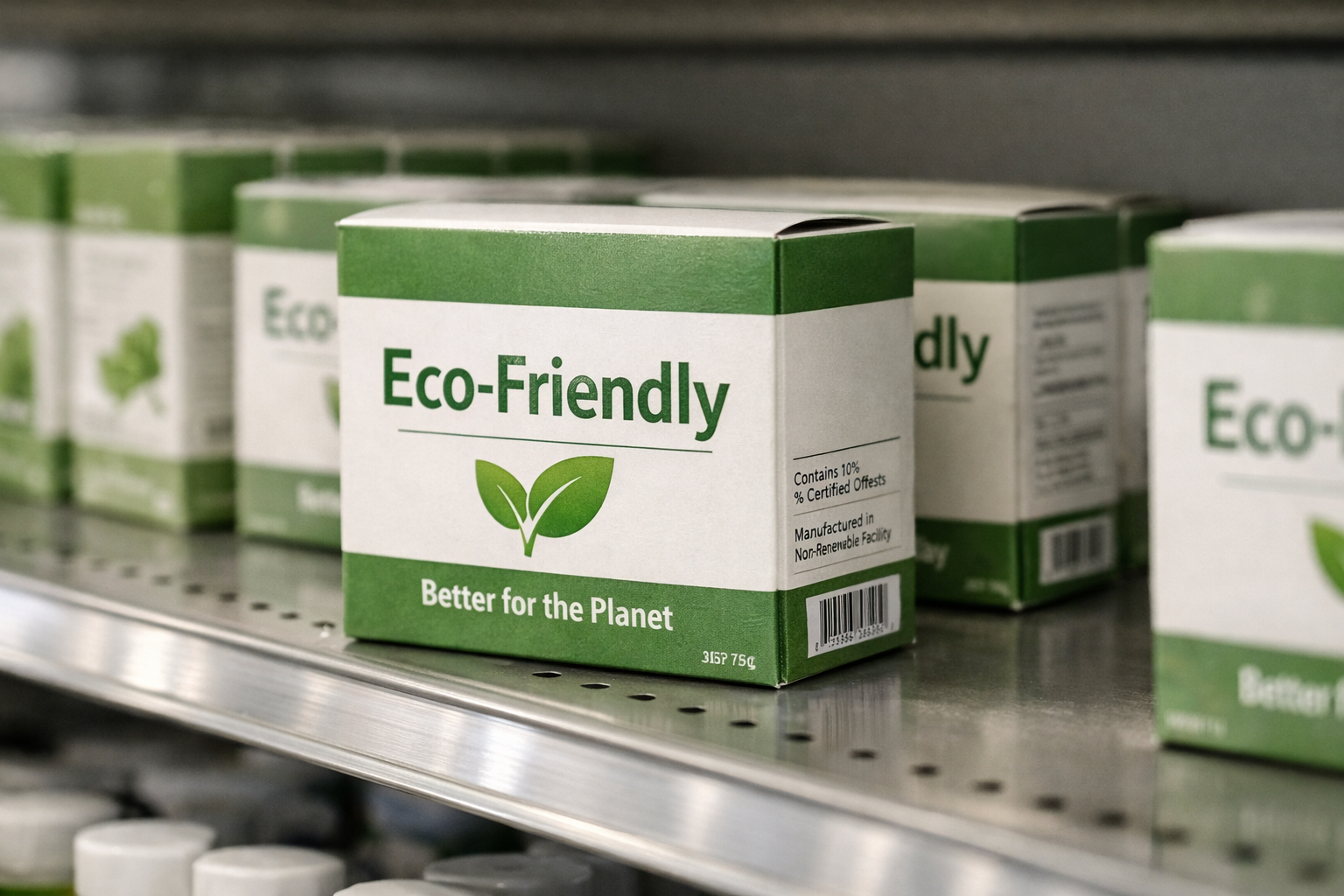
Sustainability slogans without methodology, carbon-neutral claims that rely on unclear offsets, vague third-party ESG ratings, diversity metrics that cannot be traced to a controlled data source, and aspirational net-zero commitments without documented transition logic are all becoming fertile ground for litigation. What makes this especially dangerous is that the exposure often emerges long after the claim is published, when discovery requests, investor diligence, or activist challenges force the company to produce the records behind the statement.
That is where many companies discover the real weakness.
The risk is not the phrase itself.
It is the absence of a defensible evidence trail connecting the phrase to verified data, board review, version-controlled assumptions, and legal signoff. In other words, greenwashing lawsuits increasingly start inside bad data systems long before they reach the courtroom.
This is particularly acute for PE-backed platforms and board-facing companies.
Sponsors, lenders, strategic buyers, and sophisticated boards are no longer satisfied with high-level ESG narratives. They want to understand how the company derived the metric, what controls exist around threshold changes, who approved the claim, how source data was validated, and whether the representation is consistent across sustainability reports, financing decks, website copy, and customer-facing statements.
The most dangerous mismatch is often between investor disclosure and operational reality.
A company may publish a strong sustainability report while relying on stale supplier emissions data, unverifiable workforce metrics, or aspirational carbon assumptions that were never updated after a business-unit acquisition. The narrative still reads well, but the legal exposure has already formed because the company can no longer prove what the statement meant at the time it was made. That is why greenwashing litigation is increasingly less about falsehood in the traditional sense and more about unsupported certainty.
This is exactly where TEIL’s ESG compliance platform should own the market narrative.
The differentiator is not simply reporting automation.
It is becoming the legal firewall between ESG claims and litigation exposure.
The future of defensible ESG communication belongs to companies that can connect every public-facing sustainability statement to controlled source data, preserve version history when methodologies change, maintain board-level signoff trails, and trigger legal escalation when a metric becomes stale, inconsistent, or no longer defensible.
That is how litigation prevention now begins.
A sustainability report should not merely read well. It should be able to survive discovery.
That means the real question for leadership teams is no longer whether the company has an ESG story. It is whether the systems underneath that story can withstand investor scrutiny, plaintiff discovery, acquisition diligence, and regulatory challenge without collapsing under inconsistent assumptions.
For boards, private equity-backed companies, and leadership teams publishing sustainability claims, now is the time to test whether your ESG statements are truly supported by legal-grade controls. A focused legal and systems review often reveals where carbon claims, diversity metrics, supplier data, and net-zero assumptions lose evidentiary support before those weaknesses become securities disputes, consumer litigation, or diligence friction. If your organization is publishing ESG, sustainability, or climate claims, this is the ideal moment to schedule a green-claims substantiation consultation and pre-register for TEIL’s ESG compliance platform—the legal firewall designed to connect ESG disclosures to defensible data, board-ready signoff trails, and litigation-resistant evidence controls.