
Doing Trade with Zambia and Uganda: How Freight Forwarders Enable Practical Cross-Border Logistics and Compliance
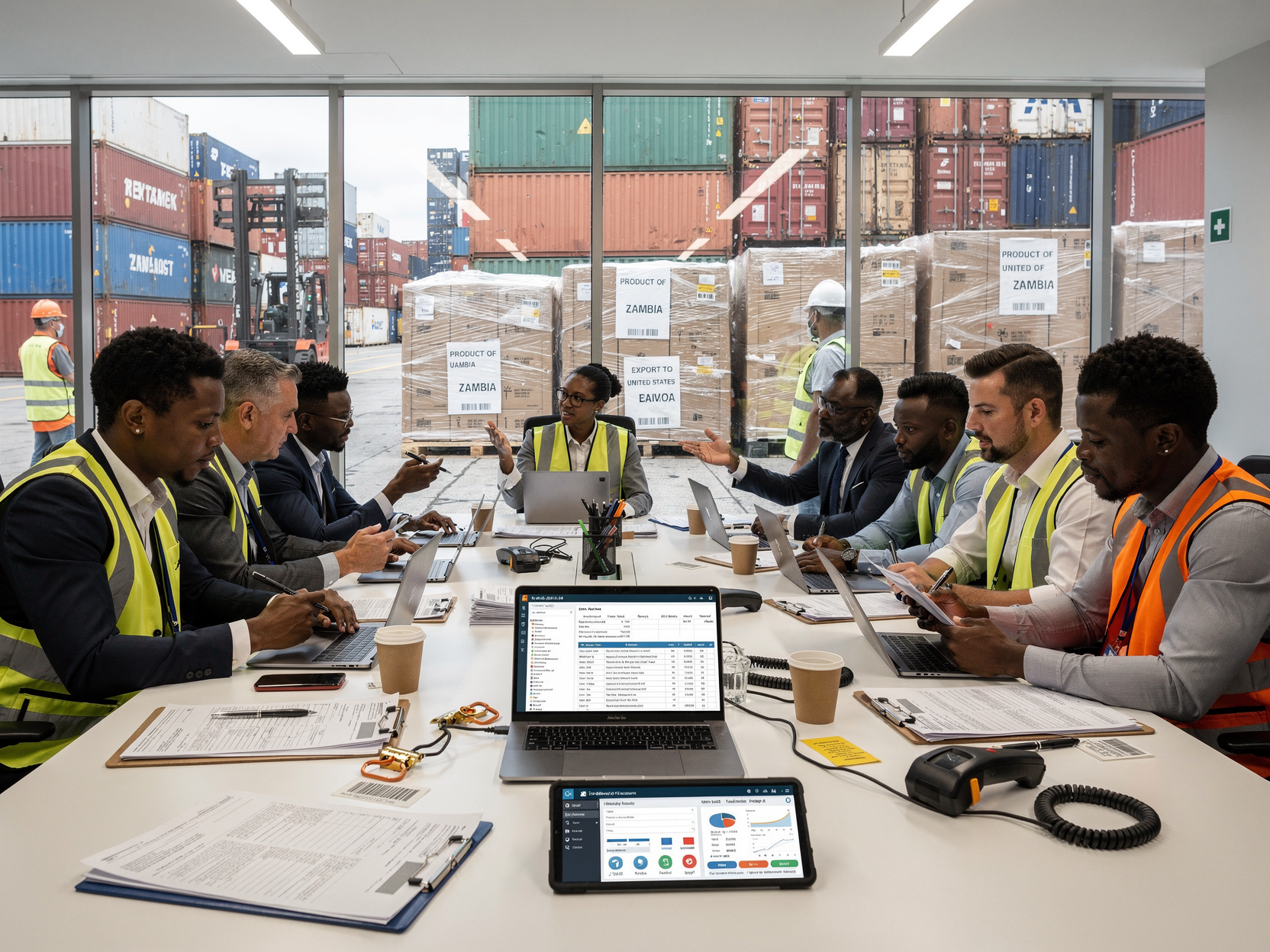
As part of our Black History Month focus on Zambia and Uganda and their growing role in global trade, international commerce between East Africa and the United States is expanding — particularly for agricultural products, manufactured goods, and specialty items. For firms navigating this space — including legal advisors — understanding the practical logistics chain is essential to ensure efficient movement of goods and seamless compliance with regulatory regimes on both ends. Freight forwarders serve as pivotal partners in this ecosystem.
Why Freight Forwarders Matter
At a high level, freight forwarders coordinate the movement of cargo from origin to destination. They act as intermediaries between exporters/importers and carriers (ocean, air, and land), handling documentation, customs clearance, carrier bookings, cargo insurance, and often 3PL (third-party logistics) services. For trade involving Zambia or Uganda and the U.S., forwarders provide end-to-end logistics orchestration and help manage operational, regulatory, and compliance risks.
Core Functions in the Zambia/Uganda → U.S. Trade Lane
Route & Mode Planning
Forwarders advise on optimal combinations of air, sea, and overland transport, depending on product type (e.g., perishables require faster, refrigerated options, while non-perishables may move via ocean freight).
Zambia, as a landlocked country, typically routes exports through regional seaports such as Dar es Salaam (Tanzania) or Durban (South Africa) before ocean freight to the U.S.; Uganda similarly leverages air freight (e.g., Entebbe) and regional dry ports.
Documentation & Regulatory Compliance
Forwarders prepare, submit and manage commercial invoices, bills of lading, certificates of origin, phytosanitary certificates (for perishables), and other export documents required by the Uganda/ Zambia revenue authorities and destination customs officials.
They coordinate with customs authorities to comply with country-specific rules (e.g., cold-chain requirements, FDA imports in the U.S., tariff codes). Effective documentation reduces port delays, penalties, and compliance risks.
Customs Clearance & Duties
Clearing agents within forwarder networks handle entries with Uganda Revenue Authority or Zambia Revenue Authority and, for U.S. imports, with U.S. Customs and Border Protection (CBP), ensuring correct classification, valuation, and duty payments.
For perishables, this includes additional inspection protocols, often in tandem with agricultural safety regulators such as the U.S. Department of Agriculture (USDA).
Cold-Chain and Specialized Handling
Perishable cargo such as fruits, vegetables, and specialty crops must move in reefer containers or controlled-temperature cargo holds, and forwarders arrange these services with carriers and ground handlers.
Specialized packaging, labeling, and handling services minimize spoilage in transit.
Transport Consolidation & Tracking
Forwarders consolidate smaller shipments (LCL) or manage full containers (FCL), optimizing cost and transit time.
Modern freight forwarders provide digital tracking and event management tools that integrate seamlessly with trade compliance systems.
Where Trade Compliance Meets Logistics
From a legal and compliance perspective, freight forwarders do more than move cargo — they help operationalize compliance:
Regulatory Knowledge Transfer: Forwarders inform clients of changes in export or import regulations (e.g., updated FDA requirements, sanitary standards, bonded warehouse rules) and advise on compliance obligations before goods move.
Documentation Integrity: Misclassification, improper valuation, or missing certificates can trigger fines or seizures. Forwarders ensure documentation accuracy and consistency, often supported by compliance teams familiar with Incoterms, tariff regimes, and sector-specific requirements.
Risk Mitigation: Forwarders manage insurance, cargo liability, and claims processes. From a legal standpoint, this overlaps with contract terms, liability allocation, and indemnities.
Examples of Freight Forwarders Supporting Zambia/Uganda−U.S. Trade
U.S. importers and exporters can work with global logistics providers that have broad networks spanning Africa and the Americas, as well as regional specialists knowledgeable about East African trade corridors:
Global Freight Forwarders with U.S. & Africa Reach
These multinational providers maintain networks and capabilities that cover Zambia/Uganda and U.S. import/export lanes (air, ocean, customs, compliance integration):
Kuehne + Nagel – One of the largest global freight forwarders, offering integrated air, ocean, and road forwarding with strong compliance solutions.
DHL Supply Chain & Global Forwarding – Extensive global logistics network with air and ocean freight services, customs brokerage, and temperature-controlled shipments.
DSV – Provides end-to-end transport solutions with significant global coverage across continents.
CEVA Logistics / Bolloré Logistics (now part of CMA CGM) – Multimodal logistics with a historic footprint in African trade corridors and evolving global forwarding capabilities.
Expeditors International and C.H. Robinson – U.S.-based firms with global networks that can link African suppliers to U.S. markets.
Regional or Local Freight Forwarders (Uganda & Zambia Focus)
These companies provide on-the-ground coordination, export documentation, and customs expertise — often working with larger forwarders’ networks for international legs:
Uganda
Loza Forwarders – Offers clearing, forwarding, air freight, and cargo transport services from Uganda to global destinations, and provides customs tax consultations.
UniCargo Forwarders – Provides multimodal forwarding (air, sea, road), customs clearance, and warehousing.
Regional networks: Companies like Bolloré Transport & Logistics and Spedag Interfreight Uganda Ltd. operate in Uganda and can facilitate international trade to the U.S.
Zambia
NAC 2000 Corporation Ltd. – Provides freight forwarding, cargo handling, cold storage for perishables, and document preparation services at key Zambian airports.
Regional providers (e.g., Limac Logistics, Mowara Limited) facilitate transit through strategic East African ports with customs and forwarding support across Zambia and Uganda corridors.
Practical Steps for Importers
Define Your Cargo Profile: Perishable goods (e.g., fresh produce) and non-perishables (e.g., manufactured components) require distinct logistics planning.
Select Suitable Forwarders: Combine global and local expertise — global firms for international legs and compliance systems, local forwarders for origin documentation and customs clearance.
Engage Early on Compliance: Work with trade compliance counsel or customs brokers to pre-validate tariff classification, duty implications, and regulatory certificates.
Monitor & Control: Use forwarder tracking systems and integrate shipment data into your internal compliance workflows to flag exceptions early.
The Bottom Line
Freight forwarders are indispensable partners in practical trade between Zambia or Uganda and the U.S. They connect transport modes, manage documentation, coordinate customs processes, and mitigate operational and compliance risks. For trade professionals and legal advisors alike, integrating forwarders into the logistics + compliance strategy ensures smoother, more predictable cross-border trade operations.
If your organization is exploring trade opportunities with Zambia or Uganda, our team works alongside freight forwarders, logistics providers, and in-house trade teams to support end-to-end compliance, contract structuring, and cross-border risk management. Use the Freight Forwarding, Logistics & Compliance Support button below to connect with our trade advisory team.