
AGOA in 2026: What the Renewal Means for Trade with Zambia and Uganda — and How Businesses Can Use It Strategically
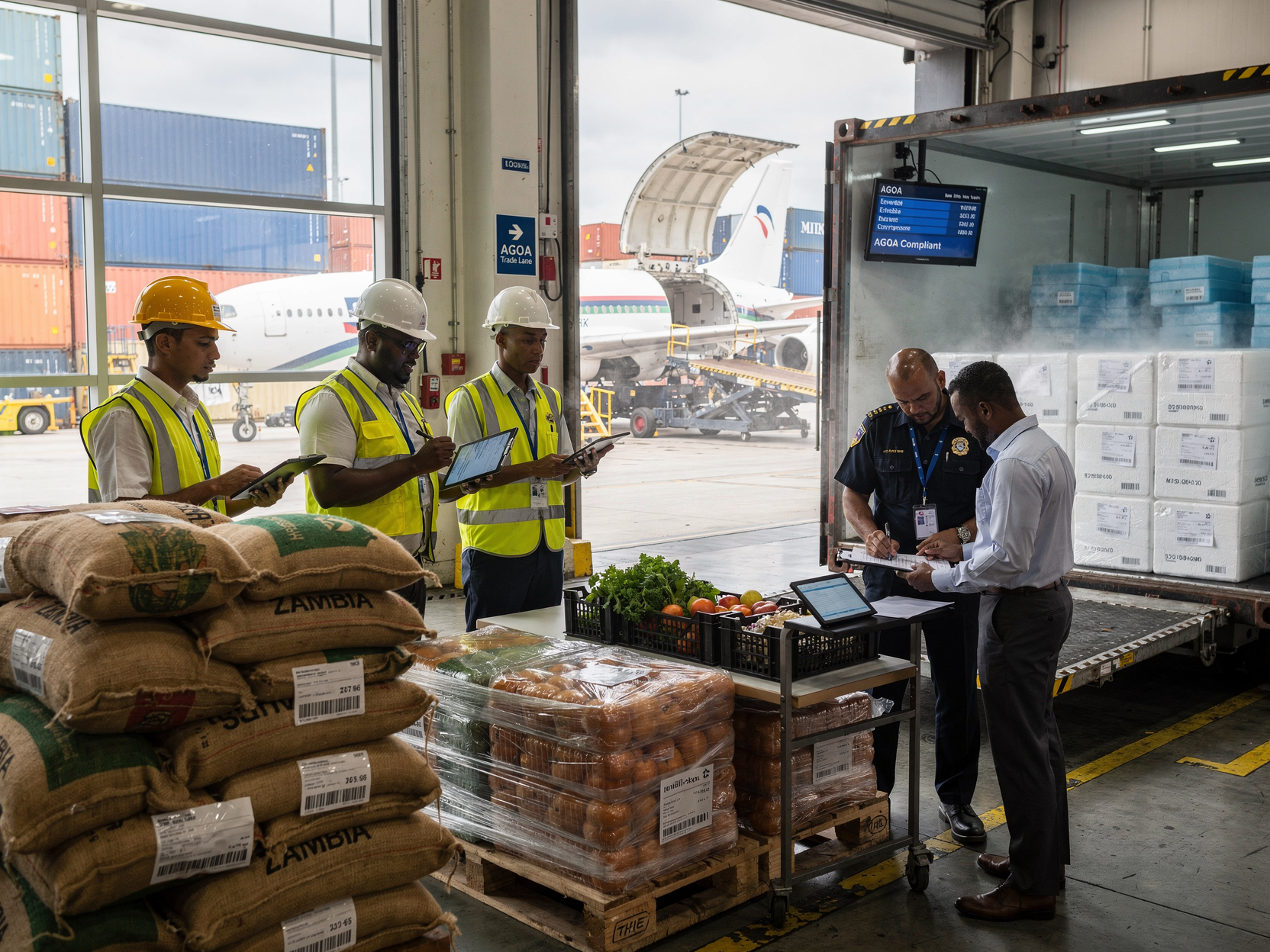
As part of our Black History Month focus on Zambia and Uganda and their expanding role in global commerce, the African Growth and Opportunity Act (AGOA) remains one of the most influential frameworks shaping trade between the United States and Sub-Saharan Africa. With the recent one-year extension through the end of 2026, exporters, logistics providers, and U.S. importers are once again evaluating how AGOA can be leveraged — particularly in emerging trade corridors linking East and Southern Africa to U.S. markets.
For companies seeking to bring goods from these regions into the United States, understanding AGOA is no longer just a policy issue — it is a practical commercial advantage that influences sourcing decisions, compliance planning, and logistics strategy.
What AGOA Actually Does — and Why It Matters for Zambia and Uganda Trade
AGOA provides duty-free access to the U.S. market for thousands of eligible product categories from qualifying Sub-Saharan African countries, spanning agriculture, apparel, raw materials, and certain manufactured goods.
In practical terms, this means that many goods exported from AGOA-eligible countries can enter the United States at reduced or zero tariffs, significantly lowering landed costs compared to imports from regions without preferential access.
For exporters and U.S. buyers focused on Zambia and Uganda, the advantages include:
Improved price competitiveness against alternative sourcing regions
Expanded opportunities for agricultural products, minerals, and light manufacturing exports
Reduced tariff exposure amid evolving global trade dynamics
Beyond direct savings, AGOA supports broader supply chain diversification — enabling U.S. companies to mitigate risk by expanding sourcing beyond traditional markets.
The 2026 Extension: Stability — But Not Certainty
The newest extension provides short-term continuity for duty-free access, offering businesses a window of relative stability for sourcing and contract planning.
However, the limited duration of the extension also signals ongoing policy debate. For businesses, this creates a dual reality:
Opportunities
Continued preferential tariff treatment
Incentives to accelerate supplier relationships and sourcing strategies
Enhanced leverage in negotiations between exporters and U.S. buyers
Risks
Policy uncertainty affecting long-term procurement contracts
Potential eligibility shifts tied to governance or trade standards
The need for flexible compliance and logistics planning
Countries participating in AGOA must continue meeting eligibility criteria, making compliance monitoring an essential part of long-term trade strategy.
Why AGOA Matters Specifically for Zambia and Uganda Trade Corridors
Trade between the U.S. and inland African economies such as Zambia — alongside regional exporters like Uganda — depends heavily on cost efficiency and market access incentives. AGOA plays a significant role in making these trade routes commercially viable.
1. Agricultural and Perishable Goods
Products such as coffee, horticultural exports, and specialty agricultural items benefit from preferential tariff access, strengthening margins and supporting competitiveness in U.S. markets.
2. Minerals, Metals, and Industrial Inputs
Zambia’s resource-driven economy aligns with U.S. efforts to diversify supply chains, particularly in sectors tied to manufacturing and industrial growth.
3. Emerging Manufacturing and Light Industry
Duty-free treatment helps offset higher logistics costs associated with landlocked export routes, allowing newer manufacturing sectors in Uganda and Zambia to compete more effectively on price.
Where Trade Compliance Attorneys Fit into AGOA Strategy
Many companies assume AGOA is simply a tariff benefit — but the reality is more nuanced. Legal and compliance considerations often determine whether businesses can fully utilize the program.
Key legal considerations include:
Rules of origin verification and documentation
Alignment with U.S. Customs and Border Protection (CBP) entry requirements
FDA or USDA regulatory compliance for agricultural imports
Contractual protections tied to AGOA eligibility status and policy risk
Because eligibility can evolve alongside geopolitical or policy developments, companies frequently work with counsel to build flexible contract structures and sourcing strategies.
For law firms advising on Zambia and Uganda trade, AGOA becomes more than a regulatory framework — it serves as a strategic planning tool connecting policy, logistics, and commercial execution.
Why There Is Strong Interest in Keeping AGOA Alive
Despite ongoing policy debates, AGOA continues to draw support because it delivers measurable benefits across multiple dimensions:
Supply chain resilience: African sourcing expands diversification beyond traditional manufacturing hubs
Lower costs for U.S. companies and consumers: Duty-free imports reduce downstream pricing pressure
Geopolitical strategy: Trade partnerships strengthen economic relationships and investment flows
Industrial development: Preferential access encourages infrastructure growth and market participation across participating countries
At the same time, policymakers increasingly view AGOA as part of a broader strategic trade framework — one that may continue evolving alongside U.S. economic priorities.
Practical Takeaway: How Businesses Can Actually Use AGOA in 2026
For companies exploring trade with Zambia and Uganda, AGOA works best when integrated into a broader operational strategy rather than treated as a standalone benefit.
Practical steps include:
Evaluating product eligibility early in sourcing decisions
Aligning freight forwarding and compliance planning from the outset
Structuring contracts to account for potential policy changes
Partnering with trade counsel to navigate origin rules, customs classifications, and regulatory exposure
The businesses that benefit most from AGOA are typically those that approach it as part of an end-to-end trade strategy — combining logistics planning, compliance oversight, and long-term market positioning.
Conclusion
AGOA continues to shape the evolving trade relationship between the United States and Sub-Saharan Africa, particularly for emerging corridors involving Zambia and Uganda. While the 2026 extension provides important continuity, companies must balance opportunity with strategic risk management.
Businesses that align logistics, sourcing, and compliance planning early — rather than treating AGOA as a last-minute tariff benefit — will be best positioned to capitalize on its advantages while navigating an evolving regulatory landscape.
If your organization is exploring AGOA-eligible trade opportunities with Zambia or Uganda, our team supports clients across trade compliance strategy, logistics coordination, and cross-border contract structuring. Use the Trade Compliance & AGOA Support button below to connect with our advisory team and explore how your supply chain can leverage current trade frameworks effectively.