
The Strait of Hormuz May Be Reopening—But U.S. Businesses Should Not Mistake That for Normal
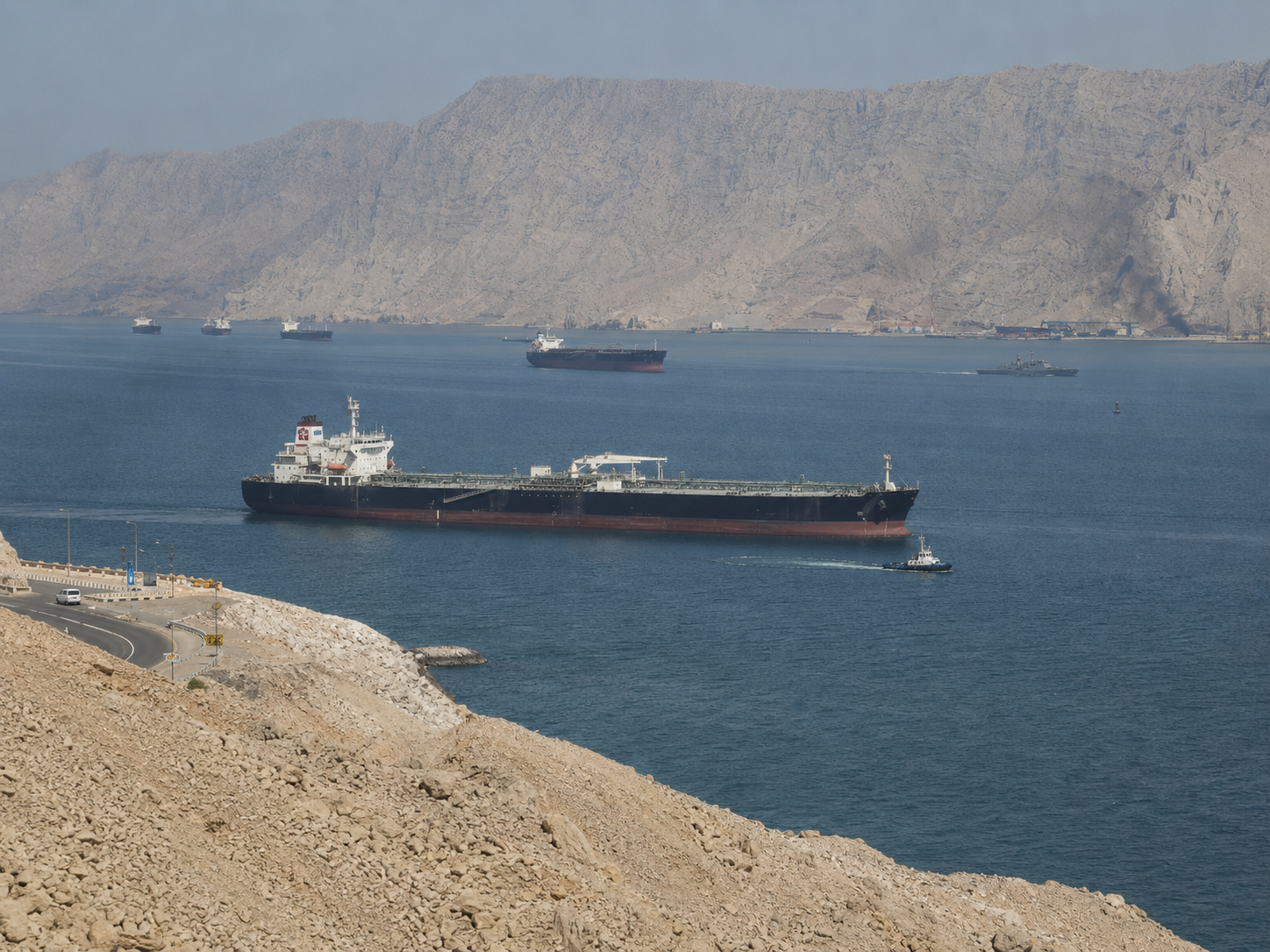
The U.S.–Iran memorandum may reduce immediate pressure on global trade, but sanctions, shipping risk, damaged infrastructure, and unresolved legal questions will continue to affect American companies.
The United States and Iran have entered into a 14-point memorandum of understanding intended to halt military operations, begin reopening the Strait of Hormuz, remove the United States’ naval blockade of Iranian ports, and create a 60-day period for negotiating a broader agreement.[1]
The announcement initially offered businesses and financial markets a measure of relief. Commercial shipping through one of the world’s most important maritime corridors could begin to recover. Additional Iranian oil may return to the market. The risk of an immediate and prolonged energy-supply shock may decline.
But the memorandum should not be confused with a final peace agreement, a complete normalization of trade with Iran, or a guarantee that shipping conditions will quickly return to their pre-conflict state.
The parties have already disagreed over implementation. Renewed attacks in and around the Persian Gulf have placed the ceasefire under pressure, and as of this publication, conflicting statements remained concerning the timing and scope of additional U.S.–Iran discussions.[2]
For U.S. business owners, the central lesson is clear:
A diplomatic announcement may change the direction of risk, but it does not immediately eliminate the legal, contractual, financial, and operational consequences of months of conflict.
What the U.S.–Iran Memorandum Actually Provides
The memorandum reportedly requires the United States to begin removing its naval blockade immediately and to complete that process within 30 days.
Iran, in turn, agreed to use its best efforts to facilitate the safe passage of commercial vessels without charge for a 60-day period. The memorandum recognizes that restoring traffic may require demining, removal of military and technical obstacles, and coordination with Oman and other Gulf states.
The parties also agreed to negotiate a more comprehensive arrangement within 60 days. Those negotiations are expected to address:
Iran’s nuclear activities;
The treatment of enriched nuclear material;
U.S. primary and secondary sanctions;
Frozen Iranian assets;
Reconstruction and economic development;
Long-term administration of the Strait of Hormuz; and
A potential United Nations Security Council resolution supporting a final agreement.
These are substantial commitments. They are not, however, fully implemented commercial rules.
The memorandum leaves difficult questions for later negotiation. It uses qualifying language, including Iran’s promise to use its “best efforts” to facilitate passage. It also contemplates future arrangements governing navigation and maritime services in the Strait.
That uncertainty matters to companies deciding whether to move cargo, enter new contracts, insure vessels, finance Iran-related activity, or rely on the continued availability of Middle Eastern energy and raw materials.
The International-Law Issue Is Larger Than the U.S.–Iran Dispute
The Strait of Hormuz is an international strait bordered by Iran and Oman. It connects the Persian Gulf with the Gulf of Oman and the wider international maritime system.
Under the international-law rules governing straits used for international navigation, coastal states may adopt certain safety, environmental, and traffic-management regulations. They may not, however, use those regulations to deny or materially impair transit passage.
Article 44 of the United Nations Convention on the Law of the Sea provides that states bordering international straits must not hamper transit passage and that there may be no suspension of that passage.[3]
The International Maritime Organization has similarly maintained that international straits cannot lawfully be closed by bordering states and that there is no legal basis for imposing discriminatory tolls or passage conditions on international shipping.
This creates an important distinction.
Iran may participate with Oman and the International Maritime Organization in managing traffic separation, navigational safety, demining, pollution prevention, and other legitimate maritime services. That does not necessarily permit Iran to convert the Strait into a toll-controlled commercial gateway or to require vessels to purchase guarantees of safe passage.
The difference between a legitimate maritime-safety arrangement and an unlawful payment demand can have serious consequences for:
Shipowners;
Charterers;
Cargo owners;
Marine insurers;
Freight forwarders;
Banks;
Energy companies; and
U.S. businesses whose goods are aboard affected vessels.
Businesses should not assume that a payment requested by a port agent, maritime authority, intermediary, or ship operator is lawful merely because it is described as a safety, administrative, or passage fee.
Reopening the Strait Does Not Automatically End U.S. Sanctions
Perhaps the most important issue for American businesses is the difference between a diplomatic commitment and an effective authorization under U.S. law.
The memorandum expresses an intention to end sanctions according to a schedule negotiated as part of a final agreement. That does not mean all existing U.S. sanctions against Iran disappeared when the memorandum was signed.
U.S. persons must continue to comply with the Iranian Transactions and Sanctions Regulations, other applicable sanctions programs, executive orders, and restrictions involving blocked persons, Iranian financial institutions, the Islamic Revolutionary Guard Corps, and designated vessels and businesses.
The memorandum itself is not a substitute for an authorization from the Office of Foreign Assets Control.
On June 22, 2026, OFAC issued Iran General License X, temporarily authorizing certain transactions involving the production, delivery, sale, and offloading of Iranian-origin crude oil, petrochemical products, and petroleum products through August 21, 2026.[4]
The authorization covers certain services ordinarily necessary to those transactions, including:
Vessel management;
Crewing;
Bunkering;
Piloting;
Insurance;
Classification;
Salvage;
Emergency repairs;
Environmental protection; and
Certain U.S.-dollar payments.
It also permits certain imports of covered Iranian-origin products into the United States when ordinarily incident and necessary to an authorized transaction.
That is a significant, but limited and time-sensitive, authorization.
It does not mean that every transaction involving Iran is lawful. It does not necessarily authorize an unrelated sale of U.S. equipment, software, professional services, consumer goods, technology, or financial services to an Iranian party.
Before relying on the general license, a company should confirm:
Whether the product is within the license’s scope;
Whether the transaction will be completed before the expiration date;
Whether every party, vessel, bank, insurer, and intermediary is eligible;
Whether another sanctions program applies;
Whether the transaction involves a prohibited end user or end use;
Whether export-control authorization is also required;
Whether payment can be processed through the proposed financial institutions; and
Whether records must be retained or reports submitted.
A temporary license can create a narrow commercial window. It can also create substantial risk for a company that assumes the window is broader or longer than it actually is.
Payments for Passage Remain a Serious Sanctions Concern
Before the memorandum was executed, OFAC specifically warned U.S. persons against paying Iran or Iran-linked organizations for safe passage through the Strait of Hormuz.
OFAC’s published guidance states that U.S. persons generally may not make payments to, or receive passage-related services from, the Government of Iran or the Islamic Revolutionary Guard Corps. OFAC also designated the purported Persian Gulf Strait Authority, which it described as an IRGC-linked mechanism for collecting passage fees.
The memorandum’s provision for passage “with no charge” appears designed in part to address that problem.
Nevertheless, companies should remain alert. A fee may be presented as:
A maritime service fee;
A port charge;
An inspection fee;
A security contribution;
A pilotage payment;
A charitable contribution;
A surcharge paid through an agent; or
A payment in goods, cryptocurrency, credit, or another noncash form.
Changing the label does not necessarily change the sanctions analysis.
U.S. companies should require full transparency concerning every fee assessed against a vessel or cargo. They should also ensure that charterers, carriers, freight forwarders, customs intermediaries, and foreign subsidiaries do not make a prohibited payment indirectly on the company’s behalf.
Why the Strait Matters Even to Businesses That Do Not Buy Oil
The Strait of Hormuz carries approximately one-quarter of global seaborne oil trade, along with significant volumes of liquefied natural gas, petroleum products, chemicals, and fertilizers.[5]
Its importance therefore extends far beyond gasoline prices.
A disruption can increase the cost of:
Manufacturing;
Electricity;
Heating and cooling;
Aviation;
Trucking;
Ocean freight;
Plastics;
Packaging;
Chemicals;
Fertilizer;
Construction materials; and
Food production.
A U.S. business may have no direct contract with a Gulf supplier and still experience higher costs because its domestic supplier relies on imported energy, petrochemicals, components, fertilizers, or transportation.
The impact can travel through several tiers of a supply chain before appearing as a price increase, delivery delay, shortage, or demand for contract renegotiation.
Oil Prices May Ease Before Business Costs Do
The reopening of the Strait may allow more crude oil and petroleum products to reach international markets. That could reduce some of the geopolitical risk premium embedded in oil prices.
But the physical recovery of the market will not occur simply because an agreement has been announced.
Before normal trade can resume:
Mines and other navigational hazards must be removed;
Stranded vessels must be repositioned;
Ports must restore normal operations;
Tankers must return to the region;
Insurers must reassess war risk;
Crews must be willing and available to sail;
Damaged facilities must be repaired;
Banks must determine which payments they will process; and
Carriers must decide whether the route is commercially acceptable.
Commercial shipping also depends on confidence. A shipowner may lawfully be able to enter the region but remain unwilling to do so without increased compensation, additional insurance, naval protection, or a revised charter agreement.
For that reason, a decline in the price of crude oil does not necessarily produce an immediate decline in transportation, manufacturing, or consumer prices.
Damage to Qatar’s LNG Infrastructure Will Outlast the Ceasefire
The conflict caused physical damage that cannot be reversed through diplomacy alone.
Iranian attacks reportedly disabled approximately 17% of Qatar’s liquefied natural gas export capacity. QatarEnergy estimated that some of the damage could take three to five years to repair.[6]
That has potential consequences for Europe and Asia, which depend heavily on LNG cargoes originating in the Persian Gulf. It also matters to U.S. businesses.
Higher or more volatile global gas prices can affect:
U.S. LNG exports;
Domestic natural-gas prices;
Electricity costs;
Chemical manufacturing;
Fertilizer production;
Glass, steel, and cement production;
Food processing;
Data-center operations; and
Other energy-intensive industries.
The effect will not be identical for every company. U.S. natural-gas production provides some insulation from overseas disruptions. Nevertheless, global LNG demand can influence domestic prices, export patterns, power costs, and the economics of long-term energy agreements.
Businesses negotiating energy-intensive contracts should therefore consider whether their pricing clauses account for prolonged LNG volatility rather than only short-term oil-price changes.
Fertilizer Disruption Could Become a Food and Consumer-Price Problem
Approximately one-third of global seaborne fertilizer trade passes through the Strait of Hormuz.[7]
The Gulf is also an important source of natural gas and sulfur used in fertilizer production. Interruptions to energy, fertilizer plants, ports, and shipping can therefore affect both the availability and cost of agricultural inputs.
For U.S. businesses, the exposure is not limited to farmers.
Higher fertilizer costs can move through the economy into:
Grain;
Meat;
Dairy products;
Packaged foods;
Restaurants;
Grocery retailers;
Beverage production;
Textiles using agricultural fibers;
Biofuels; and
Agricultural exports.
The timing is particularly important. Supply interruptions during planting and growing seasons can affect harvest yields and prices many months later.
A diplomatic settlement in June may therefore reduce future damage without eliminating costs already incurred or agricultural consequences already set in motion.
Companies in the food and agricultural sectors should evaluate their exposure for late 2026 and 2027 rather than assuming that reopening the Strait resolves the problem immediately.
The Contract Questions U.S. Businesses Should Be Asking
A geopolitical disruption often becomes a business dispute through the language of a contract.
Companies should review whether their agreements address the following issues.
1. Force Majeure
Does the clause expressly cover war, armed conflict, blockades, sanctions, port closures, mine-laying, government action, embargoes, or interruptions to maritime routes?
Does the affected party have a duty to provide prompt notice, mitigate the disruption, allocate available inventory, or use an alternative route?
A general increase in price or difficulty of performance may not, by itself, excuse contractual obligations. The answer will depend on the contract language and governing law.
2. Sanctions and Export Controls
Does the agreement permit suspension or termination if performance would violate sanctions or export-control laws?
Does the clause cover parties that become blocked after the agreement is signed?
Does it address entities owned or controlled by sanctioned parties, even when those entities do not appear by name on a sanctions list?
3. Price Adjustments
Can a supplier pass along increases in fuel, insurance, freight, tariffs, commodity inputs, or compliance costs?
Is the adjustment tied to an objective index, actual documented costs, or the supplier’s discretion?
Does the buyer have a termination right if increases exceed a defined threshold?
4. Delivery and Incoterms
Which party bears the risk of delay, additional freight, cargo damage, port substitution, insurance, customs clearance, or rerouting?
The use of an Incoterms rule can help allocate responsibilities, but Incoterms do not replace the entire sales agreement. The contract should address disruptions that the selected rule does not fully resolve.
5. Insurance
Does the marine cargo policy cover war risks, mines, missile attacks, vessel detention, delay, abandonment, and additional freight?
Is war-risk coverage excluded or subject to cancellation on short notice?
Who is responsible for purchasing additional coverage, and who bears the increased premium?
6. Demurrage, Detention, and Storage
Who pays when a vessel cannot enter or leave a port?
Does the contract suspend laytime during a blockade or military closure?
Can the carrier discharge cargo at an alternative port, and who pays for inland transportation from that location?
7. Governing Law and Dispute Resolution
Which country’s law governs?
Will a dispute be heard in court or arbitration?
Can an award be enforced against the counterparty and its assets?
Does the contract provide an efficient procedure for urgent relief when goods, vessels, or payments are detained?
These questions should be answered before a disruption—not after invoices begin to accumulate.
Businesses Should Not Assume Interest-Rate Relief Is Coming
A more stable Strait of Hormuz could reduce some inflationary pressure by lowering energy and transportation costs.
That does not guarantee lower U.S. interest rates.
On June 17, the Federal Reserve maintained its target federal-funds range at 3.5% to 3.75%.[8] Inflation, economic growth, labor conditions, productivity, fiscal policy, energy costs, and geopolitical risks will all influence future monetary-policy decisions.
For business owners, the practical lesson is that a ceasefire should not be treated as a financing strategy.
Companies should continue stress-testing:
Variable-rate debt;
Loan renewals;
Inventory financing;
Letters of credit;
Trade-finance facilities;
Foreign-exchange exposure;
Capital expenditures; and
Customer-payment delays.
A company that relies on both imported goods and borrowed operating capital may be affected twice—first by supply-chain cost increases and then by continued financing pressure.
Potential Opportunities Require Just as Much Compliance as the Risks
If the U.S.–Iran arrangement develops into a final agreement, it could eventually create commercial opportunities involving:
Energy;
Shipping;
Port rehabilitation;
Infrastructure;
Telecommunications;
Agriculture;
Medical products;
Environmental remediation;
Engineering;
Construction;
Insurance;
Financial services; and
Reconstruction.
U.S. businesses should not rush into those opportunities based solely on diplomatic headlines.
The memorandum contemplates future sanctions termination and a substantial reconstruction plan, but those commitments remain subject to negotiation, licensing, implementation, and political durability.
A company considering an Iran-related opportunity should determine:
Whether the contemplated activity is currently authorized;
Whether a U.S. person may participate;
Whether foreign subsidiaries are subject to U.S. restrictions;
Whether goods, software, or technology require an export license;
Whether the counterparty is government-controlled;
Whether beneficial owners include blocked persons;
Whether funds can lawfully pass through the proposed banks;
Whether insurance is available;
Whether the contract protects the company if sanctions return; and
Whether the transaction can survive a snapback, revocation, or expiration of sanctions relief.
Being early in a reopening market can be valuable. Being early without a compliance structure can be extraordinarily expensive.
Six Steps U.S. Business Owners Should Take Now
1. Map Your Exposure
Identify suppliers, customers, carriers, banks, insurers, and raw materials connected to the Persian Gulf, directly or indirectly.
2. Review Existing Contracts
Examine force-majeure, sanctions, price-adjustment, delivery, insurance, termination, and dispute-resolution provisions.
3. Verify Every Claimed Authorization
Do not rely solely on a counterparty’s assurance that sanctions have been lifted. Confirm the applicable OFAC license, expiration date, authorized activity, parties, and payment structure.
4. Reassess Insurance and Transportation
Ask carriers and brokers whether war-risk premiums, exclusions, cancellation rights, or routing requirements have changed.
5. Build Alternative Sources and Routes
Determine whether substitute suppliers, ports, carriers, energy sources, and payment methods are commercially and legally available.
6. Document the Business Impact
Maintain records of increased freight, insurance, storage, commodity, labor, and financing costs. Those records may be important in contract negotiations, insurance claims, price-adjustment requests, and litigation.
How TEIL Firms Can Help
The legal significance of the U.S.–Iran memorandum will not be the same for every business.
For one company, the immediate issue may be whether a shipment can lawfully transit the Strait. For another, it may be a supplier’s demand for a price increase. Another business may need to determine whether a new Iran-related opportunity falls within an OFAC general license. A manufacturer may need an alternative sourcing agreement, while an importer may need to determine who bears the cost of rerouting, insurance, delay, or port detention.
The Evans International Law Firms, LLC—TEIL Firms—helps U.S. and international businesses evaluate these risks before they become losses.
Our international business and trade services include:
Sanctions and trade-compliance reviews;
Import and export risk analysis;
International contract drafting and revision;
Force-majeure and hardship-clause analysis;
Incoterms and delivery-term review;
Supplier and distribution agreements;
International payment and trade-finance provisions;
Alternative sourcing and market-entry planning;
Contractual allocation of freight, insurance, tariff, and commodity risk; and
Cross-border dispute-prevention strategies.
Businesses with exposure to Middle Eastern shipping, energy, fertilizers, food, chemicals, manufacturing, or Iran-related transactions should not wait for a contract dispute or enforcement inquiry to determine whether their agreements and compliance procedures are adequate.
A targeted International Trade and Contract Risk Review can help identify where your company is exposed, what your current agreements actually provide, and which protections should be added before conditions change again.
Conclusion
The reopening of the Strait of Hormuz would be an important development for international commerce. It could reduce some immediate pressure on oil markets, allow stranded cargo to move, and create a pathway toward broader diplomatic and economic normalization.
But the memorandum does not erase the conflict’s consequences.
Damaged LNG facilities will take years to repair. Fertilizer disruptions may affect future food prices. Insurers and shipowners will continue pricing geopolitical risk. U.S. sanctions remain complex and only partially relaxed. The long-term legal administration of the Strait is unresolved. The ceasefire itself has already shown signs of strain.
For U.S. businesses, the appropriate response is not to assume that the crisis is over.
It is to determine how the changing situation affects the company’s contracts, suppliers, prices, shipping arrangements, sanctions obligations, financing, and growth opportunities—and to put the appropriate legal protections in place while there is still time to do so.
This article is provided for general informational purposes and does not constitute legal advice. Sanctions, export controls, maritime conditions, and governmental authorizations can change rapidly. Businesses should obtain advice concerning their particular transactions and circumstances.