
The Next ESG Enforcement Wave Will Be Won or Lost in the Supply Chain
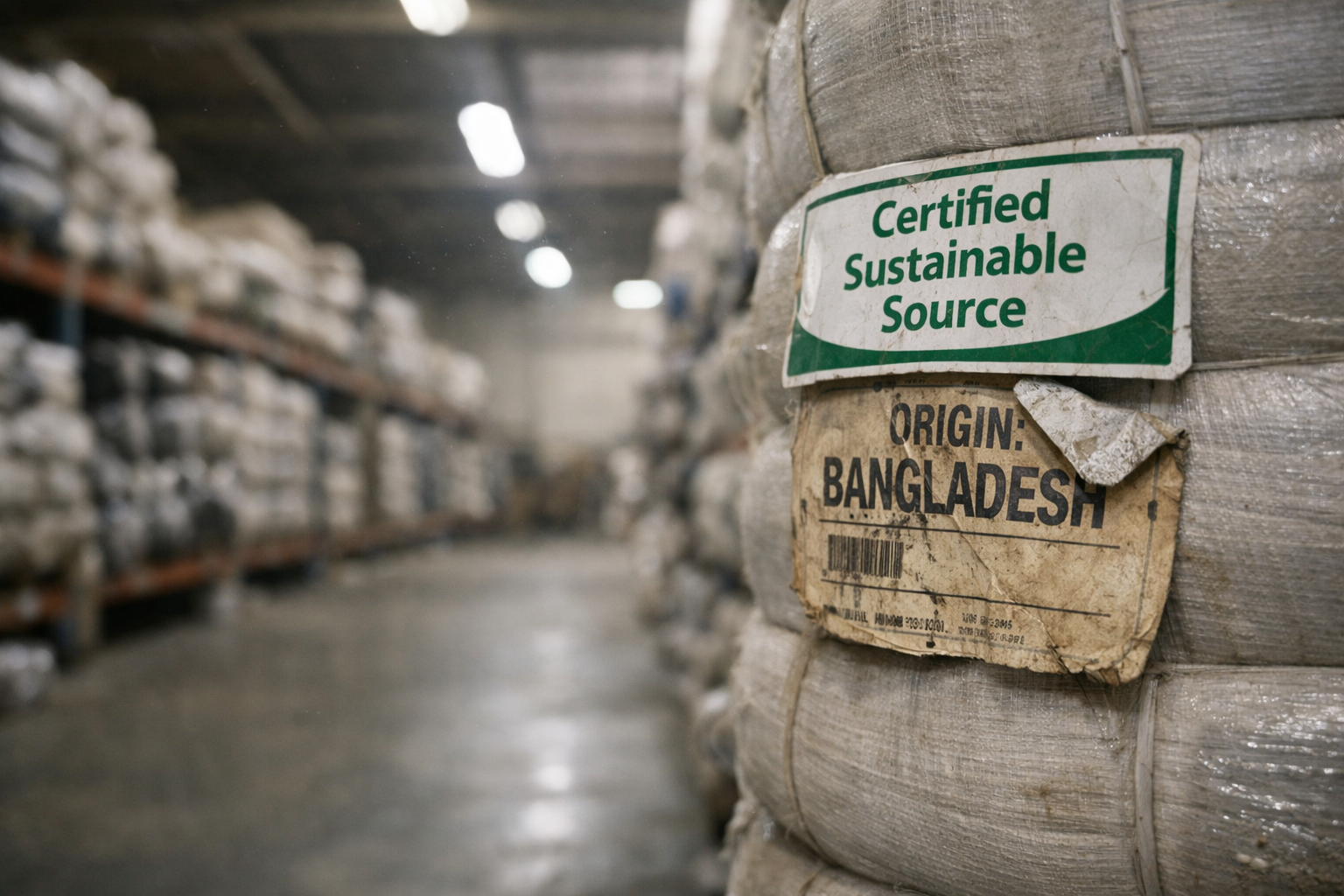
The ESG risk most companies are underestimating in 2026 is not what they disclose in the annual report.
It is what they can actually prove about the suppliers behind the disclosure.
Across Europe, the United States, and other major markets, the center of ESG enforcement has moved decisively into supply-chain due diligence. The legal focus is no longer limited to broad sustainability commitments or top-level emissions statements. Regulators, customs authorities, investors, and litigants are increasingly asking a far more operational question: what evidence supports the human-rights, forced-labor, deforestation, and environmental claims embedded in your supplier network? The 2026 legal outlook is clear that traceability through Tier N suppliers is no longer a best practice—it is rapidly becoming the expected compliance baseline.
That shift is especially consequential for importers, manufacturers, textile companies, food businesses, electronics, battery and cobalt supply chains, and any company whose brand reputation depends on upstream sourcing integrity.
For these businesses, the greatest exposure rarely begins with the direct supplier.
It begins one or two layers deeper, where supplier certifications become stale, raw material lineage gets obscured, labor subcontracting changes without notice, and environmental source data begins to drift away from the commercial records procurement teams are relying on. By the time the issue surfaces—through a customs hold, customer diligence questionnaire, NGO report, or investor review—the real problem is often not the adverse impact itself.
It is the inability to prove what the company believed to be true when it kept buying.
That is why the defining ESG question for cross-border companies is quickly becoming:
Can you prove what your suppliers told you?
For many executive teams, that question is uncomfortable precisely because the systems were never designed to answer it defensibly.
A supplier may have completed the onboarding assessment. The cobalt processor may have submitted a sourcing attestation. The textile mill may have represented that no forced labor was involved. The food processor may have certified environmental sourcing practices. But if that data is six, nine, or twelve months old—and no one can verify whether the underlying facts changed—the company is now exposed not only to regulatory scrutiny, but to the much more dangerous allegation that it relied on unverifiable data while continuing commercial activity. The current ESG enforcement trend is increasingly centered on this failure of lineage proof, not merely disclosure volume.
This is where ESG due diligence is becoming forensic.
The issue is no longer whether a supplier file exists. The issue is whether the business can trace the supplier’s statement back to a verifiable evidence chain, determine when that chain became stale, and demonstrate what internal escalation occurred once the data could no longer be trusted. Recent 2026 ESG legal analysis repeatedly emphasizes that value-chain transparency extending into indirect suppliers is now an operational requirement, particularly in forced labor, deforestation, battery, and product-ban regimes.
In practice, stale supplier data may be one of the most underestimated legal risks in ESG today.
A forced-labor screen that was clean at onboarding may become unreliable after a subcontracting change. A battery mineral declaration may become indefensible if ownership upstream shifts. A deforestation attestation may fail if geolocation or land-use data is never refreshed. What makes these failures so dangerous is that the business often continues making sourcing decisions based on what looks like complete documentation, when the real issue is that the documentation no longer reflects reality.
This is exactly where TEIL’s ESG compliance platform can own the market narrative.
The future of supply-chain ESG compliance is not another spreadsheet and not another static questionnaire.
It is forensic supplier data quality auditing, lineage verification, stale-data alerts, and legal escalation workflows that activate the moment supplier evidence becomes unverifiable.
The businesses that will be best protected in this next enforcement cycle are the ones that can identify the precise point where supplier data stopped being reliable, preserve the historical representation trail, assign vendor-level ESG risk scores, and escalate unresolved discrepancies into counsel-led review before procurement continues spending against that supplier.
That is where ESG readiness becomes legally defensible.
For boards, procurement leaders, and cross-border businesses, now is the time to test whether your current supplier diligence process can actually withstand scrutiny when regulators, customs authorities, lenders, or major customers ask you to prove the integrity of your upstream data. A focused legal and systems review often reveals where supplier traceability, stale-data monitoring, forced-labor workflows, and lineage assumptions break down before those weaknesses become import bans, enforcement inquiries, or diligence failures. If your organization depends on global suppliers, this is the ideal moment to schedule a supply-chain ESG diligence consultation and pre-register for TEIL’s ESG compliance platform, built to deliver forensic data quality audits, supplier lineage verification, stale-data alerts, and legal escalation when supplier evidence can no longer be trusted.