
The New Era of "Gender-Responsive" Trade: How Global Agreements are Rewriting the Rules for Women Exporters
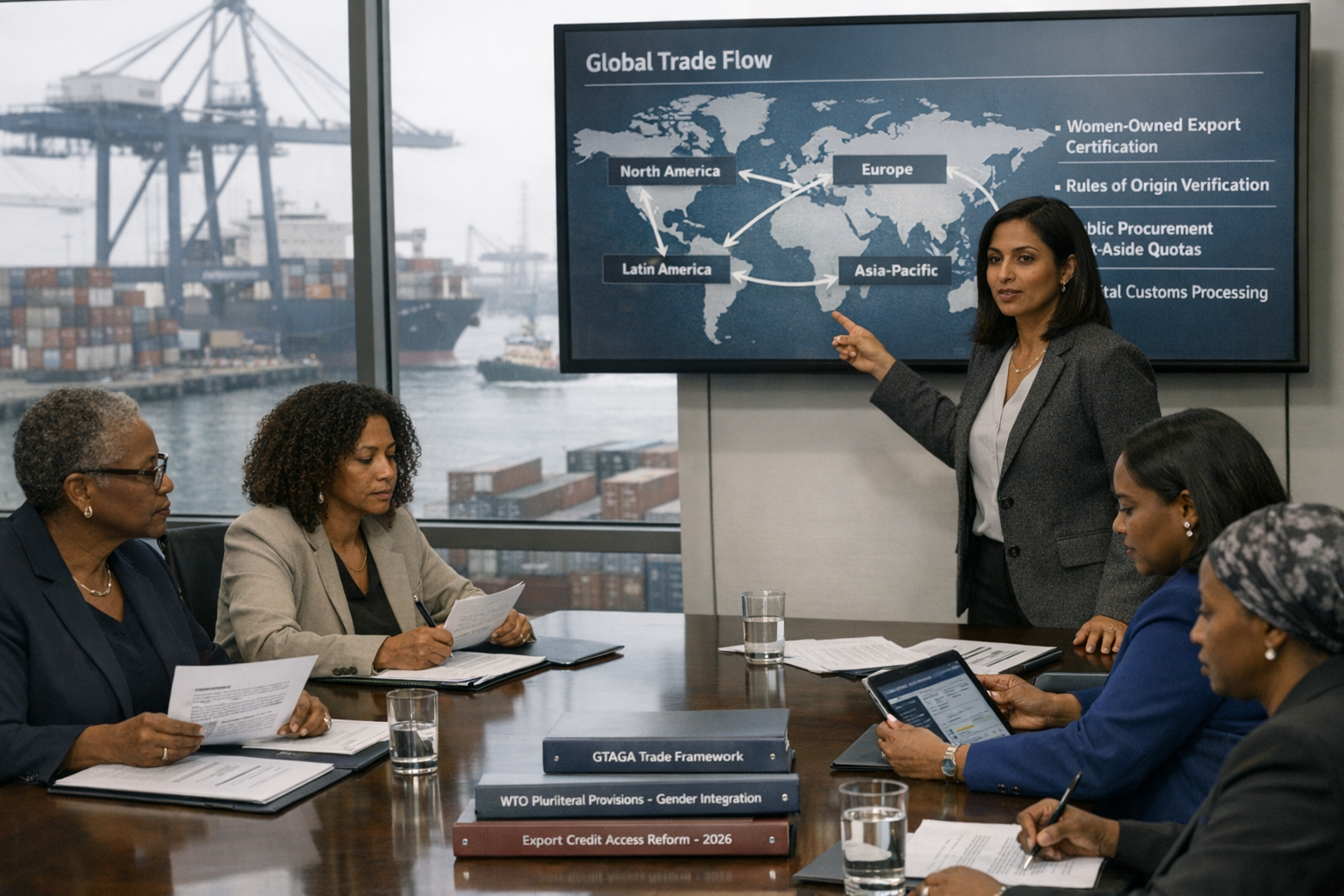
For decades, international trade agreements were considered "gender-neutral," operating under the assumption that trade policy affected everyone equally. However, as we celebrate Women’s History Month in 2026, the global community has reached a tipping point. Organizations like the World Trade Organization (WTO) and UNCTAD have officially recognized that trade barriers—ranging from lack of access to credit to discriminatory customs procedures—disproportionately hinder women-owned businesses. This recognition has sparked a revolutionary shift: the rise of "Gender-Responsive" Trade Agreements.
This isn't just a trend in corporate social responsibility; it is a fundamental shift in international law. We are moving away from "soft" suggestions of empowerment toward "hard" legal provisions within trade deals that mandate the removal of barriers for women. For the modern business leader, understanding these provisions is no longer optional—it is a prerequisite for navigating the new trade zones of the 21st century.
The Rise of GTAGA and the New Trade Zones
Leading the charge is the Global Gender and Trade Arrangement (GTAGA). Originally pioneered by Canada, Chile, and New Zealand, and recently expanded to include Mexico and other key economies, GTAGA represents a new breed of standalone trade arrangement. Unlike traditional deals that focus solely on tariffs, GTAGA-inspired provisions focus on the "human infrastructure" of trade.
These agreements are designed to dismantle specific legal and structural hurdles, including:
Discriminatory Domestic Laws: Removing regulations that prevent women from owning property or signing contracts without a male guardian—legal barriers that still exist in various forms in over 70 economies.
Access to Trade Finance: Creating legal frameworks that encourage digital lending and reduce the "collateral gap" that often prevents women-led SMEs from securing export credit.
Digital Inclusion: Mandating cooperation to ensure women entrepreneurs have the digital tools and training necessary to navigate increasingly paperless customs environments.
The WTO’s 2026 Mandate
The shift has reached the highest levels of global governance. Following the most recent WTO Ministerial Conferences, "gender-responsive trade" has moved from the sidelines to the center of the agenda. The WTO’s Informal Working Group on Trade and Gender has successfully integrated gender-specific language into new plurilateral agreements.
The statistics highlight why this shift is vital: according to recent UNCTAD data, while women-owned businesses represent nearly one-third of all businesses globally, they contribute to only a fraction of international trade volume. Closing this gap isn't just a social goal; it is an economic imperative. It is estimated that achieving gender equality in trade could add $28 trillion to the global GDP by the end of the decade.
Navigating "Gender-Responsive" Compliance
For women-owned small businesses (WOSBs) and their partners, these agreements create a new "compliance landscape." To take advantage of the preferential treatment or grants often baked into these deals, businesses must be able to prove their status through rigorous certification. We are seeing an increase in:
Origin and Ownership Verification: Stricter "Rules of Origin" that require proof that a business is truly women-controlled to qualify for specific "Gender-Zone" incentives.
Public Procurement Set-Asides: Many of these new agreements mandate that a certain percentage of government contracts be awarded to women-owned firms, requiring meticulous legal standing.
Industries Poised for Growth
The impact is felt most acutely in sectors where women entrepreneurs are heavily concentrated but historically under-represented in exports. In Professional Services, Sustainable Agriculture, and Specialty Tech, gender-responsive provisions are opening doors that were previously locked by high administrative costs and lack of networking infrastructure. By aligning with these new trade zones, women-led firms can bypass traditional "middle-men" and gain direct access to global markets.
The Legal Challenge: Turning Policy into Profit
Despite the progress, a significant gap remains between the high-level language of a treaty and the day-to-day reality of a customs dock. A "gender provision" in a trade deal is only useful if it is legally enforceable and if the business owner knows how to invoke it. This requires sophisticated legal strategy—ensuring that your international sales contracts, logistics agreements, and corporate structures are optimized to meet the specific requirements of these new "Responsive" zones.
As we look toward the remainder of 2026, the competitive advantage will go to the firms that don't just see gender as a "diversity metric," but as a strategic trade category. Whether you are expanding your manufacturing into a GTAGA member country or seeking to qualify for international procurement set-asides, your legal foundation must be ironclad.
How The Evans International Law Firms, LLC Can Help
At The Evans International Law Firms, LLC, we believe that international trade should work for everyone. This Women’s History Month, we are committed to helping women-owned businesses and global enterprises leverage these new "Gender-Responsive" agreements to scale safely and compliantly.
Our firm provides the specialized legal support you need to navigate this shift:
Global Certification Strategy: We help your business obtain and maintain the necessary certifications to qualify for gender-specific trade incentives and government set-asides.
International Trade Deal Analysis: We review the specific gender provisions in your target markets (such as GTAGA or CPTTP) to ensure you are maximizing your legal advantages.
Strategic Growth Consulting: We help you restructure your international operations to align with the evolving standards of the WTO and UNCTAD.
Don’t leave your global potential to chance. [Contact The Evans International Law Firms, LLC today] to ensure your business is positioned to lead in the new era of inclusive, gender-responsive global trade.