
The Midwest Is Already Global: Why Illinois Businesses May Be International Without Realizing It
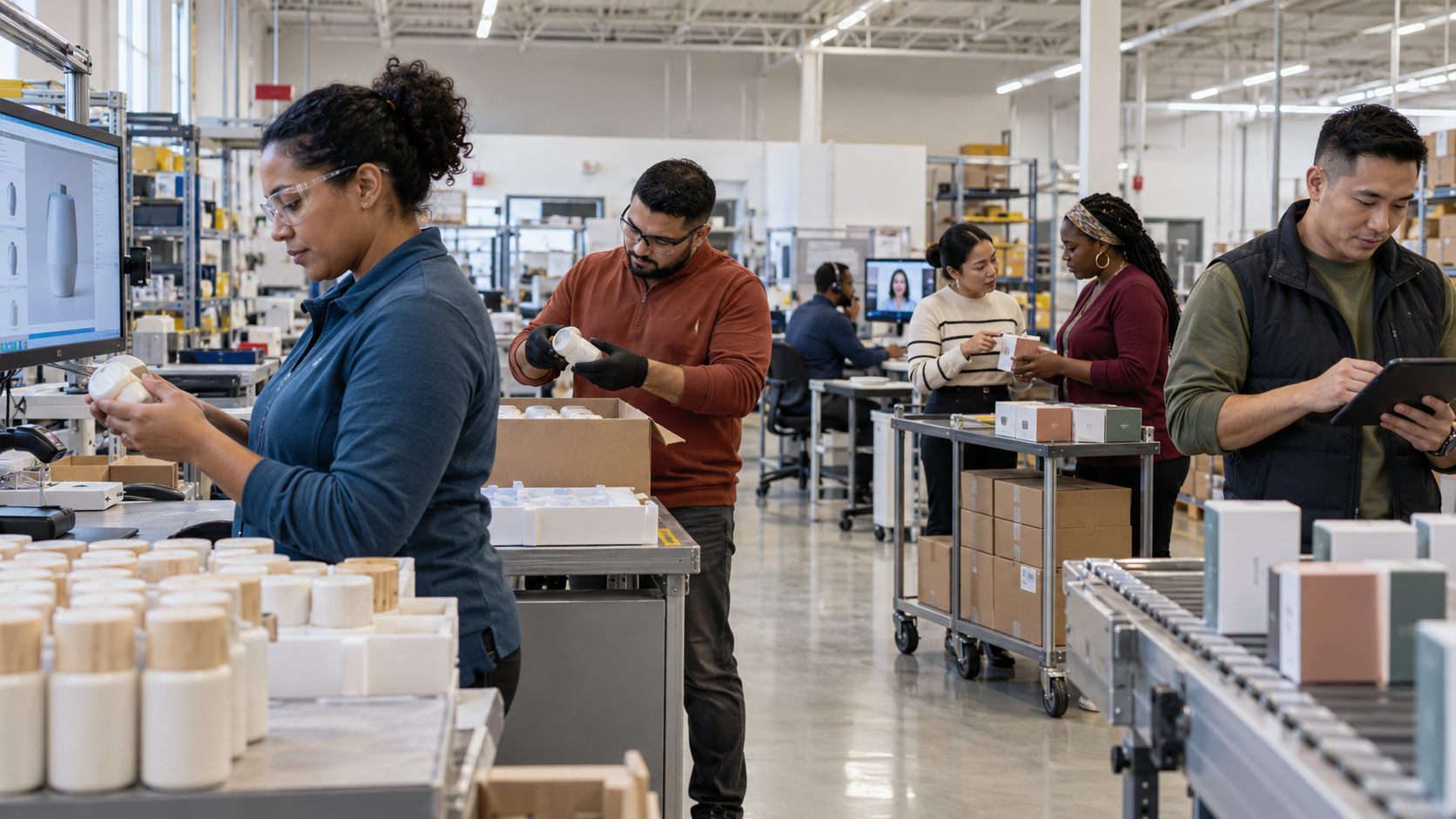
A company does not need offices in London, a factory in Vietnam, or a sales team in Mexico to be operating internationally. An Illinois manufacturer that buys components from China, a food company selling into Canada, a software business licensing its platform to European customers, or a retailer purchasing through an overseas supplier is already participating in cross-border commerce. The business may still think of itself as local or regional, but legally and commercially, international issues may already be embedded in its contracts, payments, supply chain, intellectual property, and compliance obligations.
That is particularly true in Illinois. In 2025, Illinois exported approximately $80.2 billion in goods, making it the fifth-largest goods-exporting state in the country. Canada alone accounted for approximately $18.1 billion of those exports, followed by Mexico at $11.9 billion. Illinois also exported $13.7 billion in goods to the European Union and $15.6 billion to Asia. Manufacturing accounted for the overwhelming majority of the state's goods exports, with chemicals, machinery, computer and electronic products, transportation equipment, and food products among the leading categories. United States Trade Representative
International trade is also not confined to the state's largest corporations. The latest available company-level data show that 21,929 companies exported from Illinois locations in 2023, and 89% of them were small or medium-sized businesses with fewer than 500 employees. United States Trade Representative That is an important reminder for Midwest business owners: being "international" is not a status reserved for multinational companies. It can begin with a supplier, customer, distributor, technology license, bank transfer, or manufacturing relationship that crosses a border.
Your Supply Chain May Already Make You an International Business
One of the most common ways companies become international without thinking of themselves that way is through purchasing. A manufacturer may build its final product in Illinois while sourcing circuit boards from China, packaging from Mexico, specialty chemicals from Germany, or finished components through a U.S. distributor that imports them from overseas. The company's customers may see a domestically produced product, but its ability to manufacture that product depends on an international supply chain.
That matters because the foreign source of a component can affect much more than purchasing cost. HTS classification, country of origin, Section 301 or Section 232 tariffs, forced-labor restrictions, antidumping and countervailing duties, customs documentation, and supplier compliance can all affect the true cost and legal status of imported goods. A component that appeared economical when procurement reviewed the supplier's unit price may look very different after duties, freight, customs brokerage, compliance costs, and inventory carrying costs are included.
Businesses also need to understand how much visibility they have beyond their immediate supplier. A U.S. distributor may sell the company components produced by a factory overseas, while the manufacturer never directly communicates with that factory. If tariffs, forced-labor restrictions, country-of-origin questions, or shortages arise, however, the fact that a domestic intermediary issued the invoice may not eliminate the underlying supply-chain problem. Companies that depend heavily on imported inputs should know where their critical products actually come from and which foreign relationships could materially disrupt production.
Selling Into Canada or Mexico Is International Expansion, Even When It Feels Local
For Illinois businesses, Canada and Mexico can feel commercially close enough that selling there may not feel like a major international expansion. The trade relationship is indeed extensive. In 2025, more than half of Illinois goods exports—approximately $41 billion—went to countries with which the United States has current free trade agreements, and Canada and Mexico were Illinois' two largest individual export markets. United States Trade Representative
But geographic proximity does not eliminate the border. A business selling into Canada or Mexico still needs to consider customs requirements, product classification, country-of-origin rules, payment terms, product regulations, taxes, intellectual-property protection, and the contract governing the foreign sale. USMCA can provide important advantages, but preferential tariff treatment is not automatic merely because merchandise moves between the three countries. Products must satisfy the applicable rules of origin and documentation requirements.
The same issue arises when the business relationship becomes more sophisticated. Appointing a Canadian distributor is different from accepting an occasional Canadian order. Hiring personnel in Mexico is different from shipping products to a Mexican customer. Establishing inventory, a warehouse, or ongoing services in another country can create tax, employment, regulatory, and contractual issues that do not arise from a simple export sale. Companies should therefore pay attention not only to whether they sell internationally but to how the international relationship is evolving.
Using a Foreign Manufacturer Creates More Than a Procurement Relationship
Contract manufacturing is another area where companies may underestimate how international they have become. An Illinois company can continue designing, marketing, and selling its product from Chicago while a factory in Mexico, Vietnam, India, or China performs most of the physical manufacturing. That arrangement immediately connects the business to another country's laws and raises questions that do not exist in an ordinary domestic purchase.
The manufacturing agreement needs to address product specifications, quality standards, inspection rights, subcontracting, delivery, regulatory compliance, and responsibility for defective products. It should also deal directly with intellectual property. A foreign factory may receive molds, CAD files, formulas, source code, packaging designs, trademarks, supplier information, or confidential manufacturing procedures. If the relationship deteriorates, management needs to know who owns the tooling, what information the factory may retain, whether it can manufacture similar goods for someone else, and how the company can move production to a replacement supplier.
Country of origin also becomes important when components and manufacturing occur in different countries. Moving final assembly from China to Mexico or Vietnam does not automatically change the legal origin of the product. The actual manufacturing operations matter, and an incorrect assumption about origin can undermine a tariff-saving strategy or create customs exposure. A business does not have to operate a foreign subsidiary to encounter these issues; having a foreign factory make its products is enough.
Your Website Can Take the Business International Before Management Makes a Formal Decision
Digital businesses can cross borders even faster. A software company in Chicago may launch a website for U.S. customers and later discover that companies in Germany, France, Canada, or Australia are subscribing. A consulting business can deliver services by video conference to a foreign client without anyone boarding a plane. A consumer brand can begin receiving international orders through its website or an online marketplace long before management adopts a formal export plan.
Those transactions can still create international legal obligations. Licensing software into Europe may raise privacy, AI, consumer, tax, sanctions, or contractual issues depending on the service and customer. Marketing content may reach jurisdictions with different advertising and disclosure requirements. Payment processors may introduce foreign-currency and withholding questions. The company's U.S. terms of service may also contain governing-law, dispute-resolution, and liability provisions that do not operate exactly as expected when a customer is overseas.
Digital reach can also expose intellectual property earlier than the company anticipates. A brand that begins attracting customers abroad may be visible in markets where the business has never filed a trademark. Because trademark rights are territorial and many jurisdictions prioritize filing, waiting until foreign sales become substantial can leave the company addressing a registration problem after the brand has already gained value.
The practical lesson is that management should monitor where customers are coming from. International activity that begins organically can still justify a deliberate legal response once it becomes recurring or commercially meaningful.
Overseas Distributors Can Make a Local Company Dependent on a Foreign Market
A foreign distributor can rapidly expand a company's reach because the distributor already understands local customers, language, pricing, and sales channels. That convenience can also cause businesses to underestimate how much control they are placing outside the United States.
A distributor may use the company's trademarks, operate local websites and social-media accounts, develop customer relationships, hold inventory, provide warranties, interact with regulators, and negotiate with major accounts. If the agreement grants exclusivity, the distributor may effectively control the company's access to an entire country. The U.S. business may continue operating from Illinois while a substantial portion of its international brand and customer relationships is being managed elsewhere.
That makes distributor diligence and contracting important. Companies should know who owns the distributor, whether it represents competitors, what territory it can realistically cover, how exclusivity is tied to performance, what compliance obligations apply, how it may use intellectual property, and what happens to inventory, customers, digital accounts, and trademarks after termination.
This is also where businesses sometimes discover that they became international faster than their legal structure did. The distributor agreement may be adapted from a domestic template, the trademark may never have been registered locally, and no one may have considered how a dispute would be enforced against a foreign company. Those problems are much easier to correct while the relationship is functioning than when the company is trying to replace the distributor.
International Money Creates Its Own Set of Questions
The moment a business begins sending or receiving funds across borders, payment itself becomes another international risk area. The parties need to determine currency, payment timing, bank instructions, exchange-rate exposure, withholding taxes, wire fees, and what happens if payment is delayed or disputed.
Sanctions screening can also matter even when the product itself is ordinary. A company should know who it is paying or receiving money from, particularly where foreign distributors, intermediaries, beneficial owners, or unfamiliar banks are involved. In some circumstances, a transaction can be restricted because of the party or ownership structure even when neither the product nor the country initially appears problematic.
Fraud controls deserve attention as well. International wire transactions can involve substantial amounts and unfamiliar banking information, making fake requests to change payment instructions especially dangerous. A business expanding its international activity should establish a verification procedure before a fraudulent email arrives, not after money has been sent to an incorrect account.
These issues do not require every company to create a separate international finance department. They do require the business to recognize that the same accounts-payable procedure used for a local vendor may need additional controls when six figures are being wired to another country.
The Legal Issue Is Often the Combination, Not Any One Transaction
What makes international exposure difficult to recognize is that many companies accumulate it gradually. No single transaction appears significant enough to trigger an “international expansion” project. One foreign supplier is added. A Canadian customer begins ordering. A Mexican factory is engaged. A European company licenses the software. An overseas distributor takes on the brand. Over several years, the company can build a genuinely international business while still describing itself as a Midwest company serving primarily U.S. customers.
That combination matters because the risks start connecting. A supplier decision can affect tariffs and country of origin. Country of origin changes landed cost and customer pricing. A foreign distributor creates trademark and contract issues. A foreign payment introduces sanctions and currency considerations. A manufacturing move can expose intellectual property and trigger export-control questions when U.S. technology is transferred abroad.
This is why international legal planning is most useful when it looks at the business as a whole rather than solving each issue only when something goes wrong. The objective is not to turn every cross-border transaction into a major project. It is to identify where international activity has become important enough that management should understand the dependencies and obligations it has already created.
How to Determine Whether This Applies to Your Business
A business may already have meaningful international exposure if it regularly purchases foreign components or finished products, sells to customers outside the United States, uses an overseas manufacturer, licenses technology internationally, works with foreign distributors, hires contractors abroad, transfers technical information to another country, or sends and receives substantial international payments.
The next question is how dependent the company has become on those relationships. If losing one foreign supplier would stop production, if one distributor controls access to an important customer market, if a significant portion of the company's margin depends on a particular tariff treatment, or if valuable IP has been transferred to an overseas factory, the international relationship deserves more than routine administrative treatment.
Management should also identify areas where assumptions have never been tested. Does the company know the origin and HTS classification of major imported inputs? Are its trademarks protected in important foreign markets? Do distributor agreements contain usable termination provisions? Are international counterparties screened? Do contracts address currency, taxes, governing law, and dispute resolution? Could the company move production if its foreign manufacturer suddenly became unavailable?
Those questions help distinguish incidental international activity from international exposure that has become strategically important.
What Illinois Businesses Should Do Next
The first step is not necessarily expansion. It is visibility. Management should map the company's existing cross-border relationships: where products and components originate, where customers are located, which foreign parties represent the company, what technology or IP has been transferred abroad, and where money moves internationally.
From there, the business can identify which relationships have the greatest financial or operational importance and review the legal structure behind them. A critical foreign supplier may require better origin documentation and contractual protections. An expanding Canadian customer base may justify a more formal sales agreement. A Mexican manufacturer may require IP, tooling, and subcontracting protections. European software customers may trigger a separate regulatory review.
The goal is to prioritize rather than overreact. A company with one occasional foreign order does not need the same infrastructure as a manufacturer with suppliers and distributors across six countries. But a business should know when its international activity has reached the point where informal arrangements are creating meaningful risk.
The Bottom Line
Illinois businesses do not have to leave the Midwest to become global. Many are already connected to international markets through the products they buy, the customers they serve, the technology they license, the factories they use, and the partners that represent them abroad. Illinois' $80.2 billion in 2025 goods exports and the thousands of small and mid-sized Illinois exporters participating in international trade make that global connection part of the state's ordinary commercial economy, not an exception reserved for a few multinational companies. United States Trade Representative
The important question is therefore not whether the business considers itself international. It is whether its operations already create cross-border legal, financial, and supply-chain dependencies that management should understand. Once those connections are visible, the company can make more deliberate decisions about contracts, tariffs, intellectual property, compliance, payments, suppliers, and future expansion rather than discovering its international exposure only when one of those relationships creates a problem.
This article is provided for informational purposes only and does not constitute legal advice.
Illinois and Midwest businesses with foreign suppliers, international customers, overseas manufacturers, technology licenses, distributors, or cross-border payments already have legal issues that extend beyond the domestic market. TEIL Firms can help identify those existing international touchpoints, determine which trade, contract, intellectual-property, compliance, and payment issues require attention, and organize the legal priorities around the relationships that matter most to the business. Click the button below to get legal support in understanding and protecting the global business your company may already be operating.