
Carbon Border Taxes Are Turning ESG Data Into a Trade Compliance Function
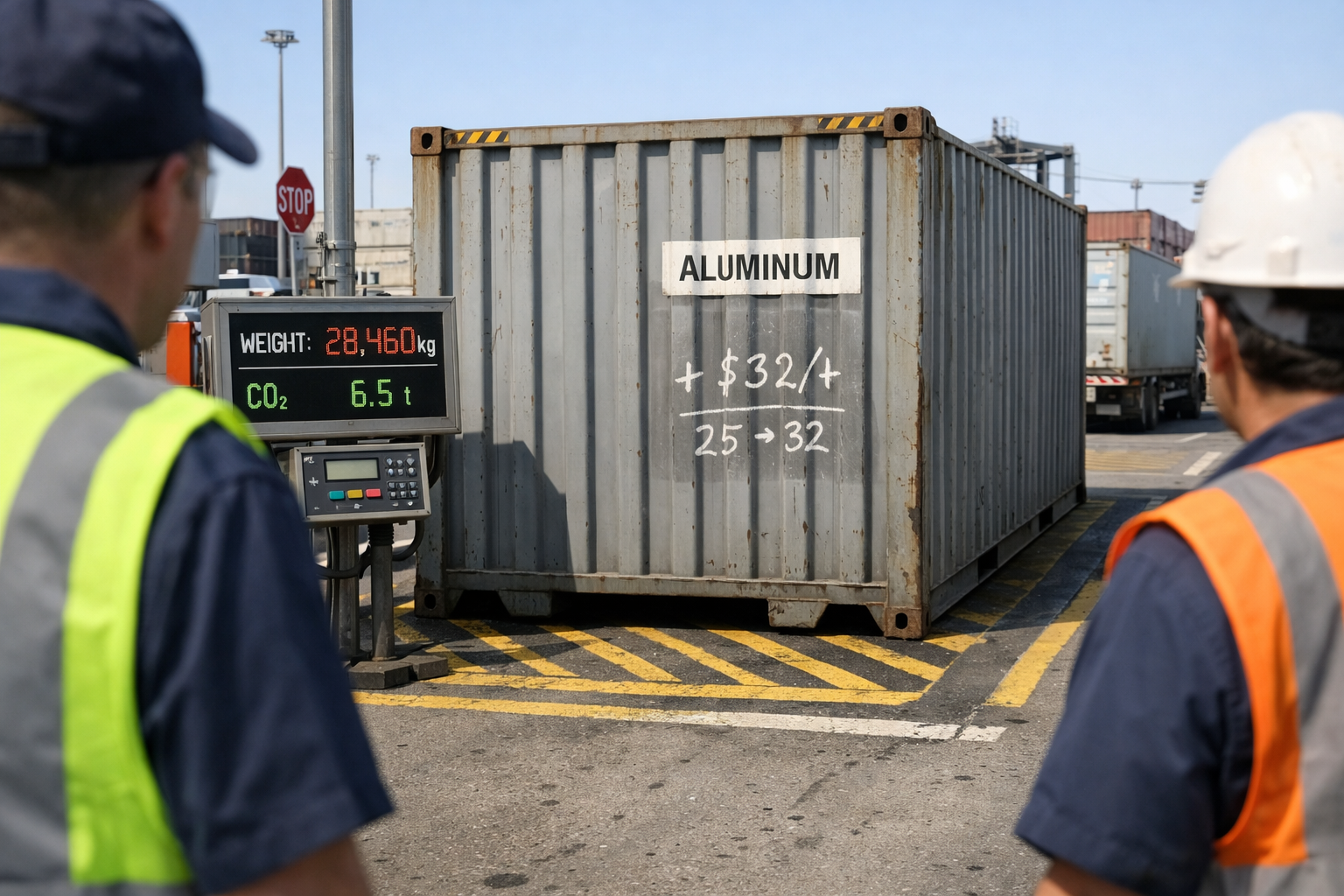
For years, customs compliance and ESG reporting evolved as if they belonged to different worlds.
One sat inside trade, procurement, and finance. The other lived with sustainability, reporting, and investor relations. Customs teams focused on classification, origin, landed cost, tariff optimization, and supplier terms. ESG teams focused on emissions disclosures, framework mapping, sustainability narratives, and annual reporting cycles. While both functions touched supplier information, they rarely relied on the same evidence layer or governance logic.
That separation is no longer workable.
The EU’s Carbon Border Adjustment Mechanism has now moved carbon data out of the sustainability report and into the import workflow itself. What was once a disclosure metric is increasingly becoming a cost-bearing customs input, shaping import declarations, certificate liabilities, and sourcing economics in real time. The UK’s CBAM regime is reinforcing the same directional shift, which means this convergence is no longer regional noise—it is quickly becoming part of the new operating environment for cross-border companies.
For importers, manufacturers, distributors, and multinational sourcing teams, this changes the role of emissions data completely.
The question is no longer whether the company can report its climate story to investors.
The question is whether the business can use supplier emissions data with enough confidence to support customs declarations, forecast landed cost, preserve procurement margin, and defend the methodology if the import economics are ever challenged.
That is a much more operational—and much more legal—problem.
The most immediate impact is on landed-cost strategy.
A product may still appear commercially attractive at the invoice level, particularly when the sourcing decision is based on historical price assumptions, stable supplier relationships, or previously optimized customs structures. But once embedded carbon costs are layered into the import model, the financial picture can change dramatically. A supplier that once looked cost-competitive can quickly become margin-destructive if its emissions methodology is outdated, unsupported, or dependent on default factors that materially increase the carbon burden at the border. In that sense, carbon reporting is no longer an abstract sustainability obligation. It is now part of the same commercial logic that determines whether a product remains viable in a target market.
This is why customs teams now need ESG data in the same way they need origin data or tariff classifications.
The carbon number has become part of import economics.
That reality creates a new level of pressure on supplier governance.
For many businesses, supplier contracts were never designed for a world in which emissions factors would directly influence border-adjustment liabilities. Price, quality, delivery, indemnities, and origin obligations were often the center of the negotiation. Today, those same agreements increasingly need to support emissions methodology consistency, supplier update obligations, audit access, lineage retention, and liability allocation when supplier data later proves incomplete or inaccurate.
That is where CBAM turns supplier emissions into contract risk.
A supplier that provides incomplete, stale, or unverifiable emissions factors can now create a chain of downstream problems that go well beyond sustainability reporting. The importer may face higher-than-expected certificate obligations, customs underpayment exposure, procurement margin erosion, pricing pressure with downstream customers, or internal disputes over whether the sourcing model remains commercially defensible. What makes this particularly dangerous is that the issue may not surface until the emissions data has already flowed through procurement assumptions, customs workflows, and customer pricing models.
By that point, the financial consequences can already be material.
This is also why the convergence between ESG and trade compliance is becoming a board-level issue.
The customs team now depends on emissions evidence. Procurement depends on fresh supplier methodologies. Finance depends on CBAM-adjusted landed-cost forecasting. Legal depends on supplier agreements that clearly allocate data responsibility and verification rights. The board increasingly needs visibility into whether the company’s sourcing decisions are being made on emissions data that is robust enough to support cross-border declarations and preserve competitive margin.
This is far more than carbon reporting.
It is trade-linked ESG compliance.
That is what makes this such a natural category for ESG Juris.
The real challenge for the reader is not simply collecting emissions numbers from suppliers. It is creating one controlled system that can validate those numbers continuously, preserve methodology lineage, connect them directly into customs and landed-cost workflows, flag stale supplier inputs before they distort margin assumptions, and support legal escalation when supplier evidence is no longer defensible.
That is the real market gap.
Most ESG tools still treat carbon as a reporting endpoint. The more sophisticated reality is that carbon is now a trade variable, a customs variable, a supplier-contract variable, and increasingly a pricing variable. The organizations that move first here will not simply be better reporters. They will be better import strategists, better procurement negotiators, and better margin managers because they will understand the true carbon-adjusted cost of doing business across borders.
For cross-border companies, manufacturers, and sourcing teams, now is the time to pressure-test whether customs, ESG, procurement, and legal are still operating as separate functions while carbon costs are already converging beneath the surface. A focused consultation can quickly reveal where supplier emissions assumptions, landed-cost forecasts, customs workflows, and contract protections are already drifting apart in ways that threaten margin and declaration defensibility. And for organizations preparing for the next phase of UK and EU CBAM expansion, this is the ideal moment to pre-register for ESG Juris—the platform purpose-built for trade-linked ESG compliance, connecting supplier emissions validation, landed-cost intelligence, customs-ready evidence, and contract governance in one continuous system.